Dusk, side view of Clayton UC

Nine Faculty Fulbright Scholars Among Record-Setting Cycle

Getting your Trinity Audio player ready...

With nine faculty, two student winners and a student alternate, this year marks the most Lehigh recipients in an academic year.

Story by

Stephen Gross

All nine Lehigh faculty members who applied for a world-renowned Fulbright Scholarship for the 2026-27 academic year were selected as the university continues its extensive and committed history with the Fulbright Scholarship program.

Combined with two student award winners and a student alternate, the total number of recipients set a Lehigh record for the most in a single cycle. In 2018-19, Lehigh had six total scholars and last academic year the university had its second-highest cycle with five combined students and faculty members.

"Our faculty are truly leaders in their fields, and the Fulbright Commission certainly recognized that this year,” Bill Hunter, director of fellowship advising and UN Programs, said. “Lehigh's global impact continues to expand rapidly, and I firmly believe that we have the potential to place even more faculty as Fulbright scholars in the future."

This year’s faculty recipients are: Santiago Herrera, associate professor; Himanshu Jain, T.L. Diamond Distinguished Chair in engineering and applied science and professor of materials science and engineering; Johanna Kowalko, associate professor; Alberto J. Lamadrid, professor of economics and of industrial and systems engineering, director of the Institute for Cyber Physical Infrastructure and Energy; Jill McDermott, associate professor; Nik Nikolov, associate professor of architecture; Jessica Peng, assistant professor of anthropology and Asian studies; Muhannad T. Suleiman, professor of civil and environmental engineering and deputy director of the Advanced Technology for Large Structural Systems (ATLSS) Engineering Research Center; David Vicic, Howard S. Bunn Distinguished Professor of Chemistry.

The Fulbright Program is the flagship international academic exchange program sponsored by the U.S. government, which aims to foster mutual understanding between the U.S. and other countries since 1946. The program awards approximately 9,000 students, scholars, teachers and professionals from the U.S. and more than 160 countries each year, according to the Fulbright Program website.

Lehigh’s strong history with the program dates back more than 20 years.

Here’s a closer look at this year’s faculty recipients and their upcoming work:
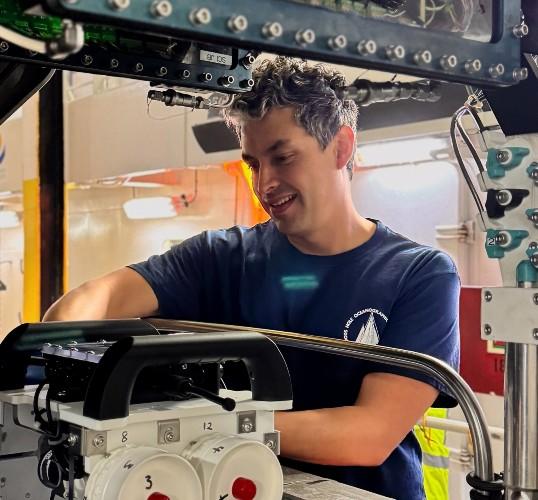
Santiago Herrera

Photograph of a smiling man working on complex machinery.

Associate professor

Location: Museo Argentino de Ciencias Naturales in Buenos Aires, Argentina

Position: Researcher

Herrera will be working on the first genomic synthesis of Argentina's deep-sea ecosystems, integrating environmental DNA, underwater imagery and museum specimens to establish biodiversity baselines for the South Atlantic. He said he’ll collaborate with, and train, the next generation of Argentine marine scientists.

The research will build on expeditions conducted in 2025, which marked the first-ever deployments of a remotely operated vehicle in Argentine deep waters.

Himanshu Jain

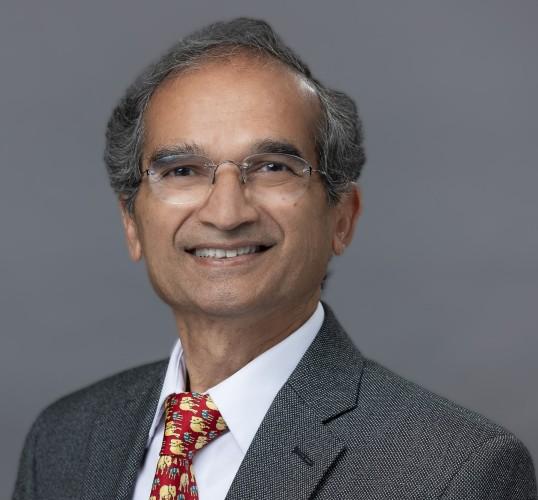
Photograph of a smiling man wearing glasses, a grey suit, and a red elephant-patterned tie.

Diamond Distinguished Chair in engineering and applied science and professor of materials science and engineering

Location: Instituto de Ceramica y Vidrio—CSIC in Madrid, Spain

Position: Specialist for engineering education

Jain’s focus will center on engineering education at two levels—the pre-college level and the doctoral level. For pre-college students, there is a joint effort to use glass and ceramic materials to develop new, hands-on demonstrations that pique their interest in engineering and science. And as for the doctoral students, Jain said he hopes to understand how Spanish national labs, universities and industry partner for the training of STEM PhDs in use-inspired research. Regardless of the level, Jain said the goal is to get students to recognize the necessity of engineering in their everyday lives.

“I am hoping this experience will help us improve the models of doctoral training in the USA,” Jain said.

Johanna Kowalko

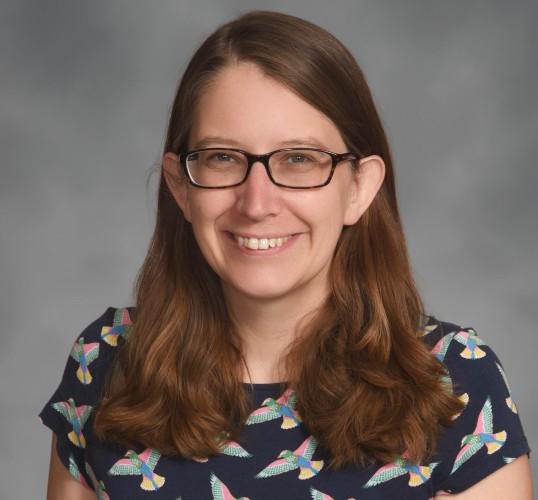
Professional headshot of woman with brown hair past her shoulders. She's smiling and has glasses.

Associate professor

Location: University of Munster in Munster, Germany

Position: Researcher

Working with Nicolas Rohner at the University of Munster, Kowalko intends to establish genetic tools that will investigate resilience to metabolic dysfunction in cavefish. Many diseases, she said, are characterized by metabolic changes. And establishing the mechanisms underlying metabolic dysregulation is critical to developing treatments for many of those diseases.

“Cavefish have evolved metabolic changes, but do not exhibit any of the adverse effects of these metabolic changes, providing a powerful opportunity to study the genetic basis of and resilience to metabolic dysfunction,” Kowalko said. “By leveraging my expertise developing genetic tools and that of Dr. Rohner, an expert in cavefish metabolic evolution, this project will provide novel insight into the mechanistic basis of disease resilience.”

Alberto J. Lamadrid

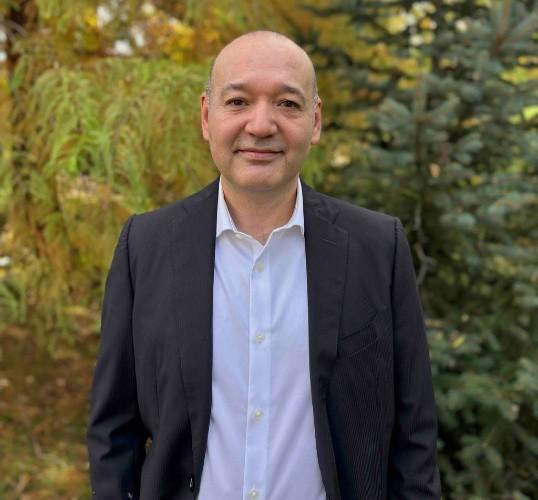
Smiling man in a dark blazer and white shirt with autumn foliage in the background.

Professor of economics and of industrial and systems engineering, director of the Institute for Cyber Physical Infrastructure and Energy

Location: Universidad Nacional de Colombia Sede Medellín in Colombia

Position: Researcher

Collaborating with faculty and students at UNal Medellín, Lamadrid will examine the role of renewable energy and AI in modern electricity systems. The focus will be on the development and evaluation of dynamic systems models that capture the interactions among variable renewable energy resources, electricity demand, market prices, regulatory frameworks and policy incentives.

“By integrating advanced modeling techniques with AI-driven analytical tools, the project seeks to better understand how different market and policy designs influence system reliability, resilience, investment decisions and the transition toward more sustainable energy systems. This work will provide a platform for joint research, student engagement and the development of long-term international collaborations addressing emerging challenges in energy system planning and operation,” according to Lamadrid.

Jill McDermott

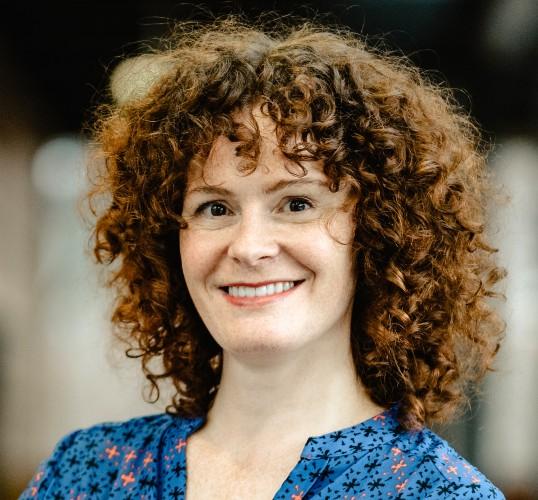
Photograph of a smiling woman with curly auburn hair wearing a blue patterned shirt.

Associate professor

Location: Universidad de Buenos Aires in Buenos Aires, Argentina

Position: Researcher

Investigating how carbon cycling interacts with sediments to shape diverse seafloor benthic ecosystems along the Argentine continental margin, McDermott will be mainly working within the University of Buenos Aires’ chemical oceanography laboratories in collaboration with Instituto Argentino de Oceanografía (CONICET).

“Using sediment samples collected from a recent deep-sea expedition, I will analyze pore-water and gas samples and apply thermodynamic modeling tools to calculate methane stability and carbonate saturation equilibria,” McDermott said. “Outcomes will be used to evaluate how chemical environments influence the growth, survival and skeletal construction of calcifying invertebrates, such as deep-sea corals. Beyond the research itself, I will host graduate-level workshops and hands-on laboratory sessions to train local Argentine students in quantitative marine chemistry techniques.”

In addition, McDermott said she’ll provide bilingual instruction materials and will donate materials to support local research in hopes of strengthening the institutional ties with Lehigh.

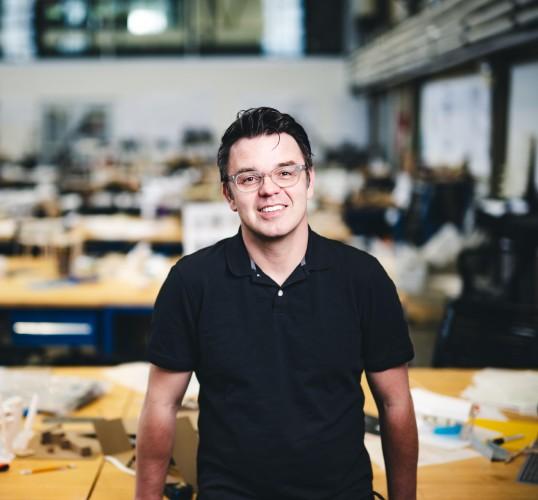
Nik Nikolov

Photograph of a smiling man in a black polo shirt and glasses in a design workshop.

Associate professor of architecture

Location: Italy

Position: Researcher

The project will investigate a group of settlements built by the Italian government in Sicily during the 1940s. Using LiDAR scanning and producing high-resolution digital 3D models, Nikolov’s research will focus on evaluating the potential of these settlements for communities in the 21st century.

According to Nikolov, the settlements were part of a resettlement strategy in southern Italy, similar to efforts in Libya, Somalia, Eritrea and Ethiopia around the same time. “Its function was to reclaim, modernize and repopulate Sicily, which the authorities considered backward, underdeveloped and ‘empty,’” Nikolov said.

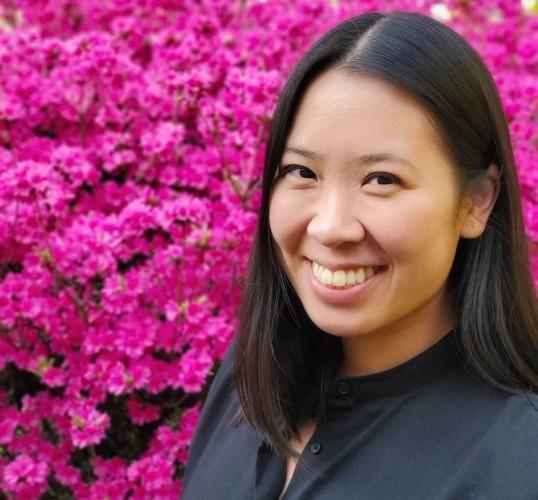
Jessica Peng

Photograph of a smiling woman with long dark hair in front of bright pink flowers.

Assistant professor of anthropology and Asian studies

Location: Universitas Indonesia in Jakarta, Indonesia

Position: Researcher

Hosted by the Universitas Indonesia’s Department of Sociology, Peng will work with scholars, brokers, educators and rural communities as she conducts ethnographic research on Indonesia's education system and labor migration industry. Her research will look at how they are creating new pathways channeling young people from schools into transnational migratory work. Working with scholars, migration brokers, educators and rural communities, she plans “to understand how shifting inter-Asian labor and education networks are reshaping youth futures and family decision-making in contemporary Indonesia.”

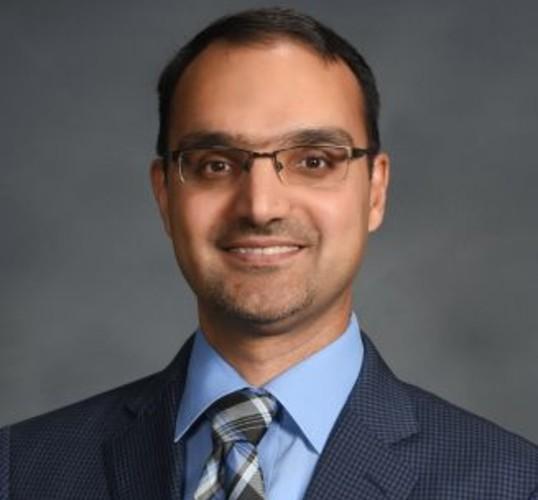
Muhannad T. Suleiman

Headshot of a smiling man with glasses, wearing a blue shirt and patterned tie.

Professor of civil and environmental engineering and deputy director of the Advanced Technology for Large Structural Systems (ATLSS) Engineering Research Center

Location: Amman and Irbid, Jordan

Position: Research, teaching and professional development

Through this work, Suleiman is seeking to bridge the research, educational and professional gap for civil engineers in Jordan by conducting research on soil-structure interaction (SSI) of solar and wind energy infrastructure. Jordan is addressing critical challenges to its water and energy supplies through its Economic Modernization Vision and Roadmap, which emphasize large-scale national projects in water, transport and renewable energy, according to Suleiman. He said the government is also pursuing education reforms to close the skill gap between education outcomes and the expected labor market demands.

“The performance and resilience of these infrastructures depend on soil-structure interaction,” Suleiman said. “Yet, SSI is rarely emphasized in undergraduate or graduate civil engineering curricula, even in the United States. This gap is particularly concerning in Jordan because of the common weak soil conditions posing additional engineering challenges that students must be prepared to tackle in practice.”

Suleiman will also introduce a dedicated course on SSI at Jordan University of Science and Technology (JUST) while teaching a graduate-level research methods class. He will also lead workshops for students and junior faculty at several institutions. The workshops include applying for graduate scholarships, proposal writing and professional development.

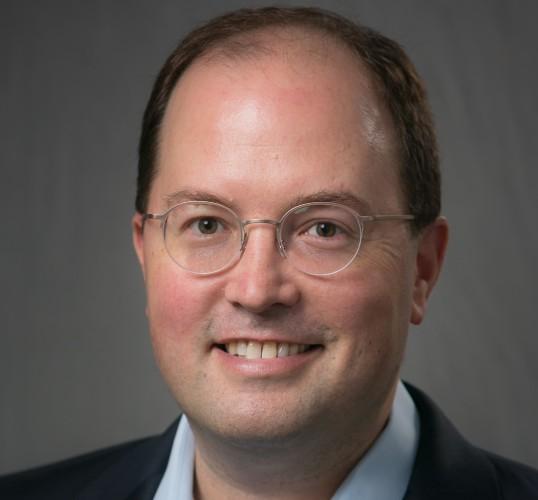
David Vicic

Professional headshot photograph of a smiling man wearing glasses.

Howard S. Bunn Distinguished Professor of Chemistry

Location: Slovenia

Position: Researcher

Collaborating with researchers at the Jožef Stefan Institute in Ljubljana, Vicic said he will be working on developing new reagents that improve the stability of antibody-drug conjugates and facilitate the linking of monoclonal antibodies with cytotoxic drugs.

Story by

Stephen Gross