Healthcare Discoveries: Effectiveness of Antimicrobial Peptide LL-37
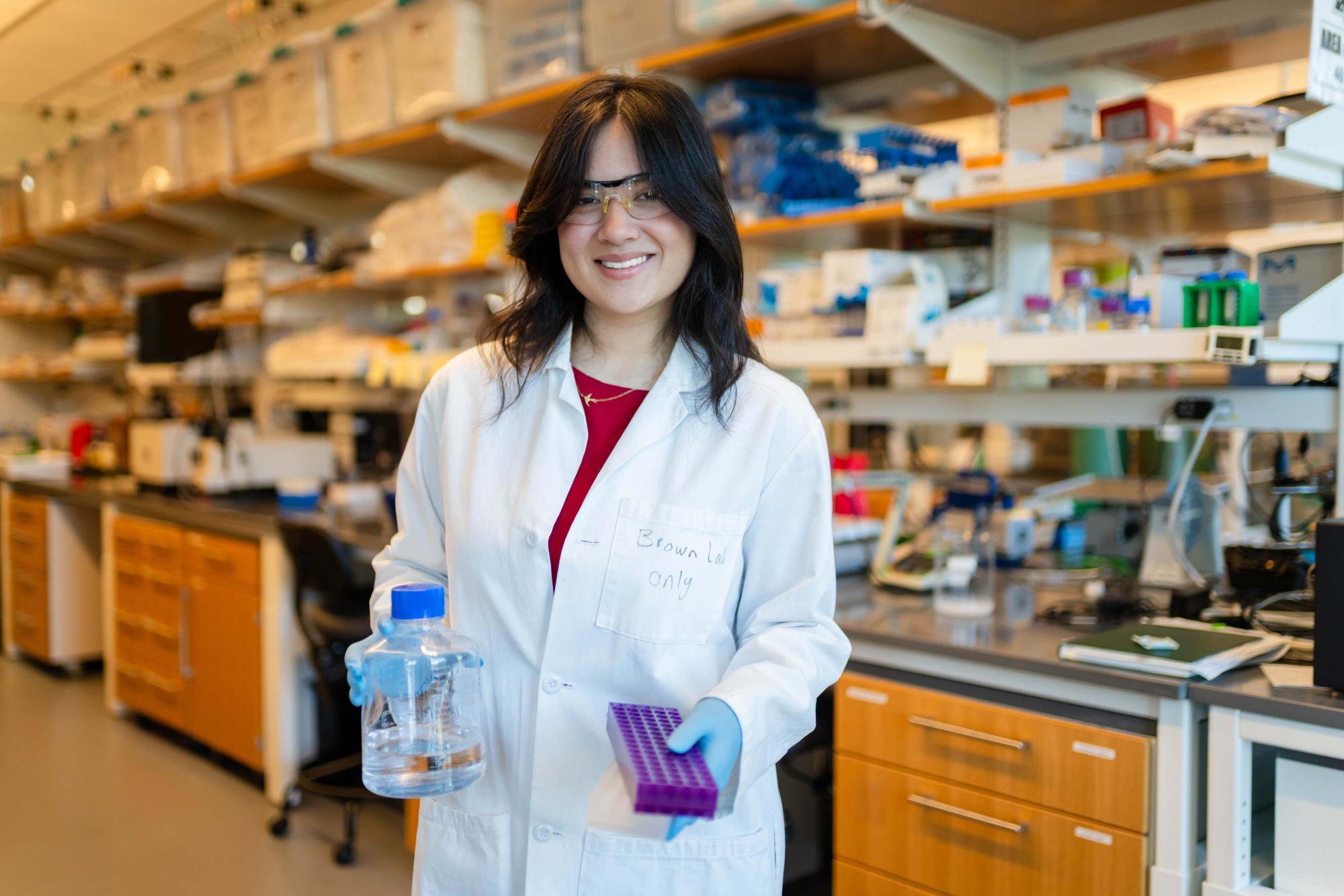
The journey to hands-on discovery for Wu began in a first-year engineering course when she heard Angela Brown, associate professor of chemical and biomolecular engineering, present research grounded in uncovering novel ways to treat bacterial diseases: a growing global health concern as bacteria evolve defenses against existing antibiotics.
After the presentation, Wu sent Brown an email— the initial introduction that led directly to Wu’s first lab experience.
“Professor Brown has been incredibly supportive, and I feel so lucky to have found her as a resource and mentor,” Wu said. “She was the first person to encourage me to apply to the Clare Luce Boothe [Program for Women in STEM] and reminded me to take care of myself throughout it all.”
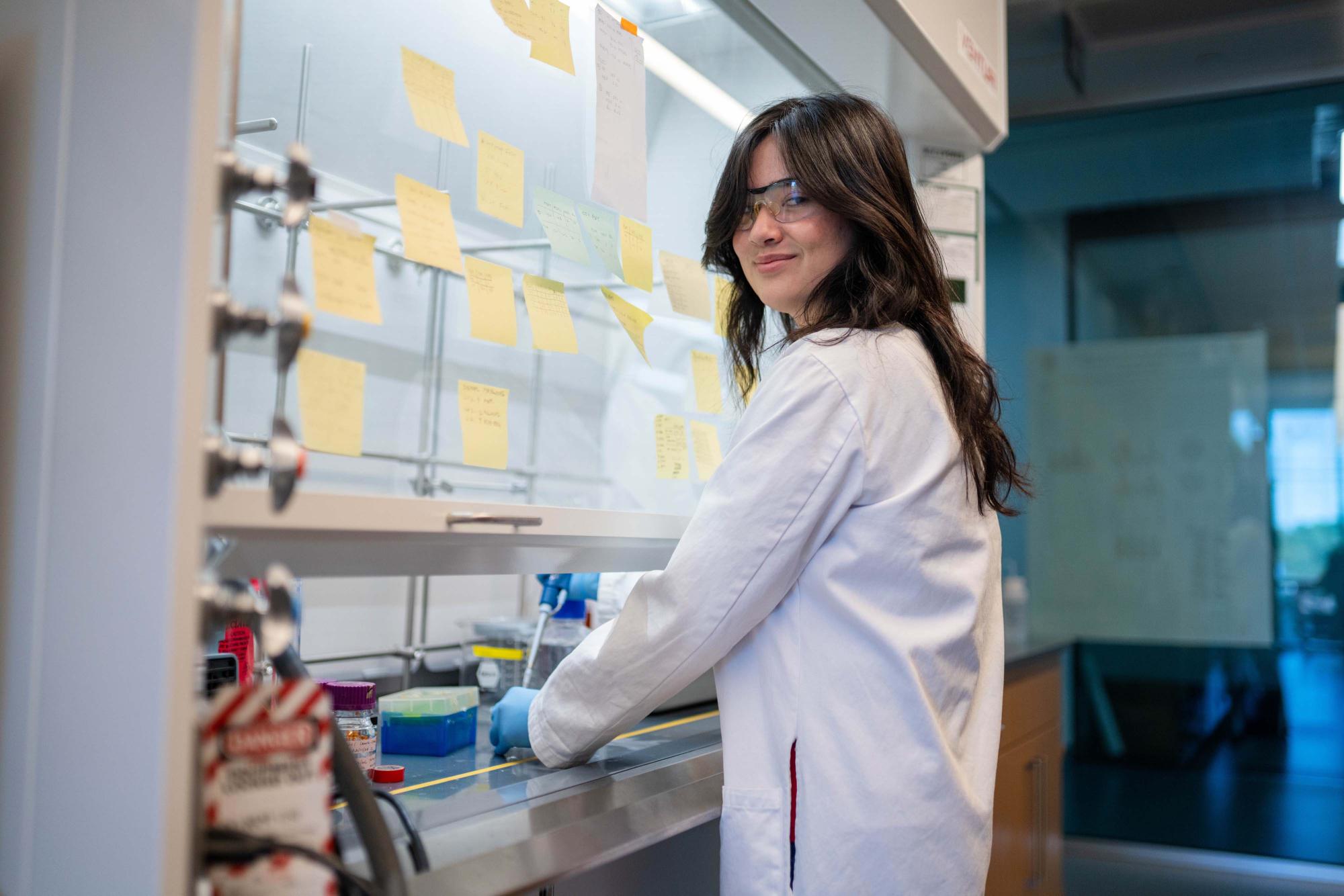
Working alongside Brown and graduate mentor Mahsa Khodabakhsh Majd Ph.D.’28, Wu focuses on LL-37, a naturally occurring antimicrobial peptide found in the human immune system. She studies how bacteria release tiny membrane-bound particles called vesicles that can act as decoys, distracting LL-37 before it reaches the bacteria itself. During the experiments, she encountered an unexpected result: positively charged liposomes, synthetic vesicle-like structures, appeared to make LL-37 even more effective at killing bacteria.
Instead of seeing the anomaly as a setback, Wu saw an opportunity. She used fluorescence microscopy to observe how bacteria, vesicles and liposomes interacted. Some experiments produced surprising images of bacterial cells clustering together.
“That’s what I love about research; you’re not going in a straight line,” Wu said. “I heard someone say once to fall in love with the problem and not the solution. That’s what excites me most.”
Shifting Focus: Real-World Impact in Maternal Reproductive Health
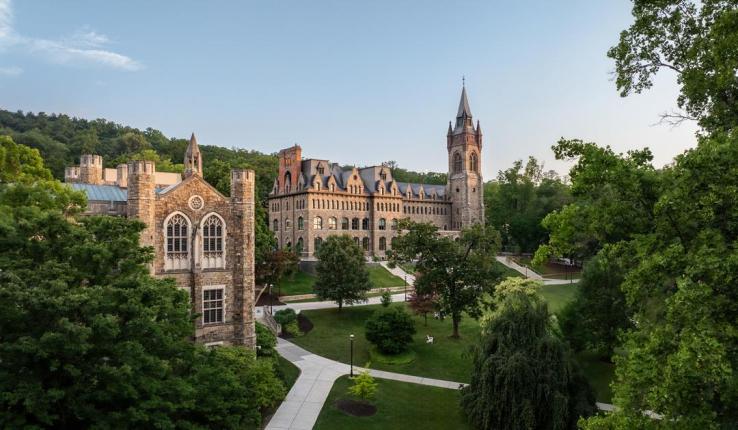
Wu’s work is a testament to Lehigh’s "Future Maker" spirit, using pragmatic problem-solving to tackle global challenges. While her current lab work is ongoing, she sees a transition in her future studies toward reducing maternal mortality and improving women’s health outcomes.
“It really resonates with me that women die while they’re bringing life into the world,” Wu said. “Pregnancy is an amazing gift, but it’s also a medical burden. Your health shouldn’t be at risk when you’re trying to build your family.”
This summer, Wu will intern with the Population Council in New York City, a nonprofit contributing to research focusing on preterm birth. She plans to pursue graduate school and continue working at the intersection of biomedical research, healthcare equity and women’s health. Wu said she is especially interested in research-driven organizations that focus on medical challenges that may not receive widespread commercial attention.
“There are important therapies and research questions that aren’t necessarily immediately profitable,” she said. “And it’s unfortunate that sometimes scientific discovery gets passed off to entities that aren’t always as focused on the global impact. Being able to have a stake in where therapies go and how they help people is really important to me and we need people doing this work.”
Mentorship in STEM at Lehigh and Creating Lasting Change
Wu’s success reflects a campus-wide commitment to mentorship. Beyond the Brown Lab, she credits Joseph Menicucci, associate chair of chemical and biomolecular engineering, and Jennifer Marangos, STEM-focused fellowship advisor, for pushing her to see her own potential as a research leader. Wu credits Marangos with motivating her to consider applying for the Rhodes, Churchill and Gates Cambridge scholarships.
The Goldwater Scholarship is a building block in a much larger story, Wu said, one that she attributes to the power of curiosity, connection and meaning. Noticing how important it is to invest in long-term research and students with the same drive she has, Wu said most work that results in scientific discovery is gradual, purposeful and “contributes to change that lasts.”
Just like in her peptide research, Wu knows that as her future unfolds, each small step forward holds the potential for yet another essential discovery.
“If I hadn't sent that email, none of this would have happened,” she said. “You never know where something small is going to lead. I feel just as much pride in the research process as I do in the award itself.”