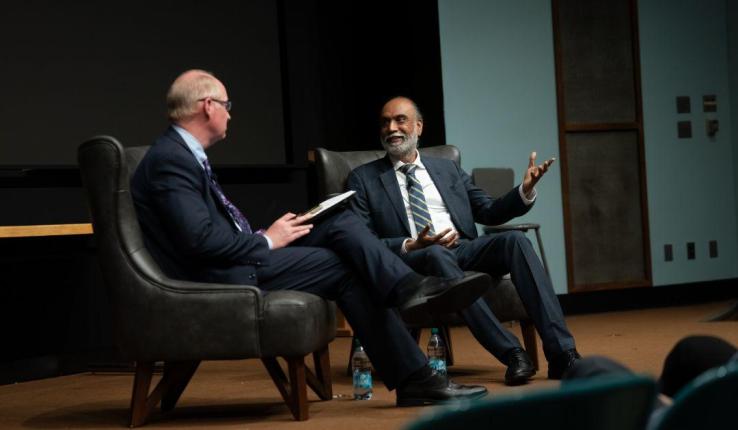





Your inventions, such as the Apple I personal computer, helped spur the rapid advancement of technology over the past five decades. What fostered your spirit of innovation and discovery?
I had help from my father, who was an electrical engineer. I taught myself electronics by 10 years old. Nothing digital existed, so I taught myself over time… to design computers, only on paper. I could never afford a single chip, but I was lucky to grow up [in the Bay Area] where everything was moving [toward] chips that could make computers. I was in the middle of it happening. I never wanted to start an industry; I just wanted other engineers to look at my designs and say, ‘he’s an incredible engineer.’ When I graduated high school, I was going to be an engineer.
When did you realize your work was not just building a company, but changing the way people live?
When we started Apple, I knew that what I had come up with was five years ahead of the others, because I built what they were trying to do five years before. I showed [the Apple I] at the HomeBrew Computer Club [a late 1970s Bay Area-based hobbyist group that was a catalyst for the personal computing revolution]. Every computer before that had a front panel of switches and lights. This wasn’t affordable for a normal person. I had to somehow turn it into a computer that did something useful. They used the word computer, but it wasn’t; it was a processor. I had my typewriter and it just became so obvious to everyone. This is how we should do it. We should design a keyboard, a terminal and turn it into a computer. I passed out my designs for free to 250 members of our club and said, ‘You can build it. You want to start this revolution. Here’s a cheap, useful computer.’ No wonder that one computer was our only source of revenues for the first 10 years of Apple as we moved into the Fortune 100 and the Fortune 20.
You helped bring personal computing to everyday life. As AI transforms our world today, what feels familiar and what feels entirely new to you?
Computer technology helps us do more things better, faster. AI bothers me more than most advances, because [they] were tightly controlled; at least we knew how they worked. AI is not regulated at all; everybody says it should be. AI is good for collaboration. It can give you a lot of ideas. It would help if AI noted what it was trained on; it might give some clue as to bias. It should also have attributions … a better way to validate content.
What do you wish more people understood about how real innovation happens?
A lot of people say, follow your heart and your dreams, and you’ll get there. You’ll get somewhere, but it may not be valuable. You might achieve it someday, but that doesn’t always pan out. Luck is a very important factor.
Watch a video of Steve Wozniak at Lehigh here.