Unlocking the Undiscovered: From the Cosmos to Life’s Frontiers
From a named asteroid to a discovered shape, a revolutionary telescope to cutting-edge materials, Lehigh’s legacy of real discovery spans galaxies, cells and everything in between.
Getting your Trinity Audio player ready...
At Lehigh, discovery is something you can hold in your hands, see in the night sky, or explore under a microscope. It’s the pursuit of knowledge, truth, impact and what’s real and using it to move the world forward.
That mindset goes back more than a century, when a Lehigh student helped put the university's name among the stars. In the early 1900s, Joseph B. Reynolds, a sharp and purposeful master’s candidate, was studying under Lehigh professor John Hutchinson Ogburn. When a new minor planet (now classified as an asteroid) was discovered, Ogburn saw an opportunity. He reached out to the discoverer, Rev. Joel Metcalf, an astronomer in Massachusetts, with a proposal: if Metcalf would share his observational data, Reynolds would calculate the object’s orbit. Metcalf agreed on one condition: Reynolds and Ogburn would get to name it. Metcalf accepted, and the asteroid was officially named “691 Lehigh.”
Today, that asteroid still orbits, a quiet but enduring symbol of what real mentorship and meaningful student work can achieve.
Fast-forward a century, and the spirit of real discovery is alive and thriving in Lehigh labs, classrooms and observatories.
In recent years, former bioengineering professor Javier Buceta and his international collaborators made a discovery that rewrote a chapter of biology and geometry. Using computational modeling, they uncovered a never-before-named geometric shape, one adopted by epithelial cells as tissues bend and form during development. They called it the scutoid.
The scutoid illustrates how living organisms, from insects to humans, efficiently organize cells in 3D space. Buceta described it as “a prism with a zipper,” a twist in nature’s design that had existed unnoticed.
The discovery started with a strange result in a computer model. Buceta’s team validated the prediction through experiments across multiple species, confirming that cells naturally form this new shape to maximize packing stability and minimize energy.
The scientific impact was immediate, as was the cultural effect. The scutoid exploded into public consciousness, was featured in The New York Times, Newsweek, Smithsonian, Forbes, and on The Late Show with Stephen Colbert. Beneath the headlines was a breakthrough with real biomedical potential. Understanding how cells organize in space could fundamentally reshape how we engineer tissues and artificial organs.
Real breakthroughs are not limited to the lab. They happen in how we think about scale, sustainability and the building blocks of modern life. Elsa Reichmanis, professor and Carl Robert Anderson Chair in Chemical Engineering, brings decades of transformative work in materials science to the next generation of students and researchers. A member of both the American Academy of Arts and Sciences and the National Academy of Engineering, she is recognized nationally and internationally for reshaping the field and inspiring innovation across disciplines.
Her career spans Bell Labs, Georgia Tech and Lehigh, where she directs the Institute for Functional Materials and Devices. A pioneer in photonic and electronic materials, Reichmanis helped design one of the first manufacturable polymers used in silicon chip production, laying groundwork for the devices we rely on every day. Her team continues to lead research into polymers and hybrid materials for next-generation electronics, sustainable energy, and high-capacity storage, always guided by one question: How do we turn discovery into something real?
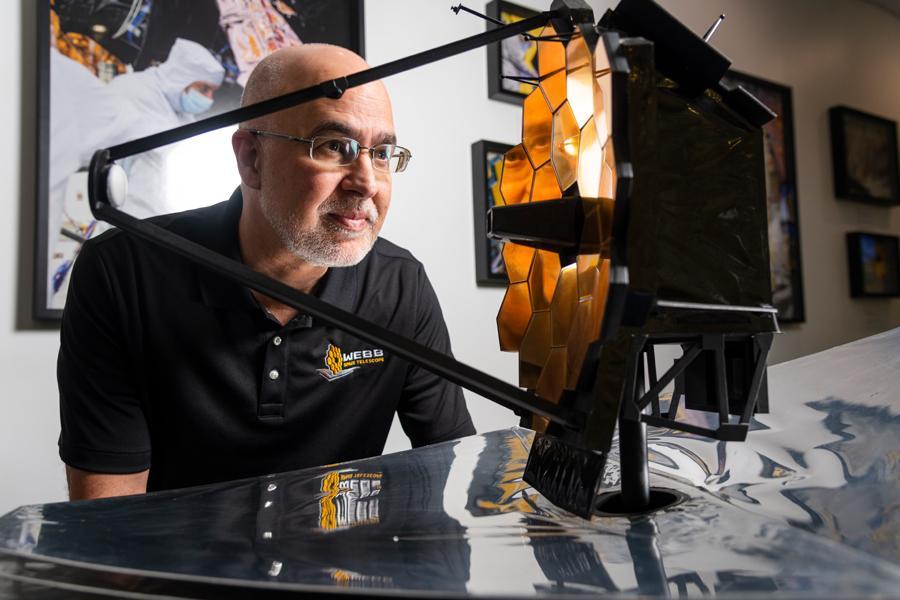
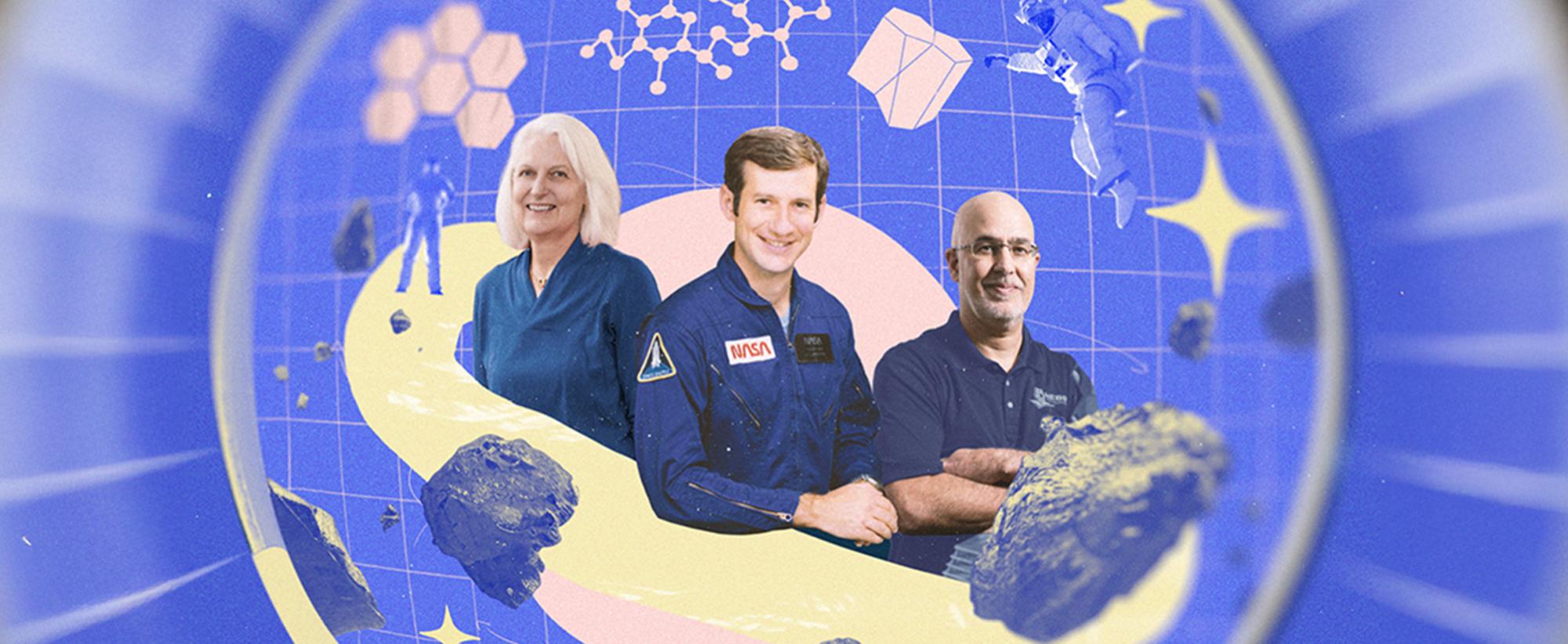
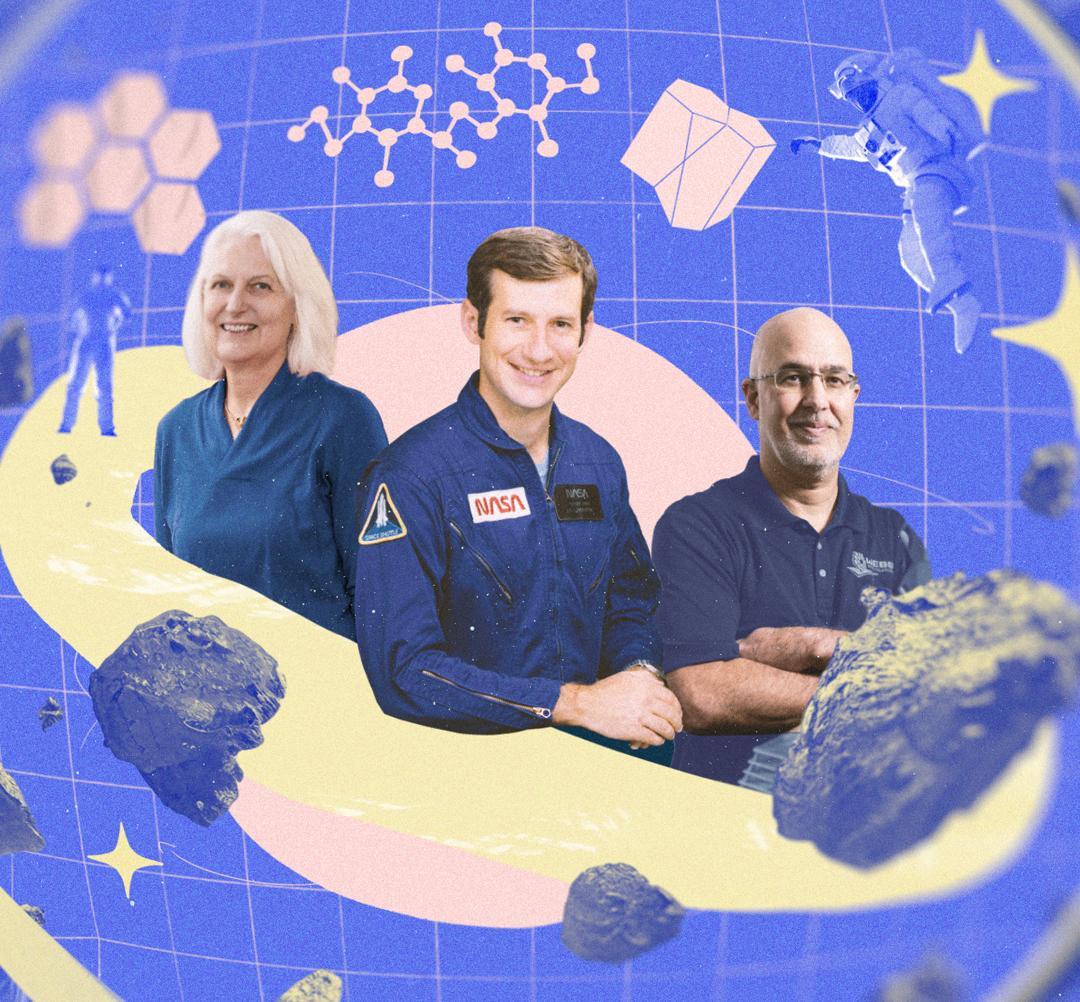
Program manager of the James Webb Space Telescope at Northrop Grumman and a member of the National Academy of Engineering (NAE) since 2024, Scott Willoughby ’89 led a team tasked with most of the telescope's design and construction.

Elsa Reichmanis, professor and Carl Robert Anderson Chair in Chemical Engineering, is recognized nationally and internationally for reshaping the field and inspiring innovation across disciplines.
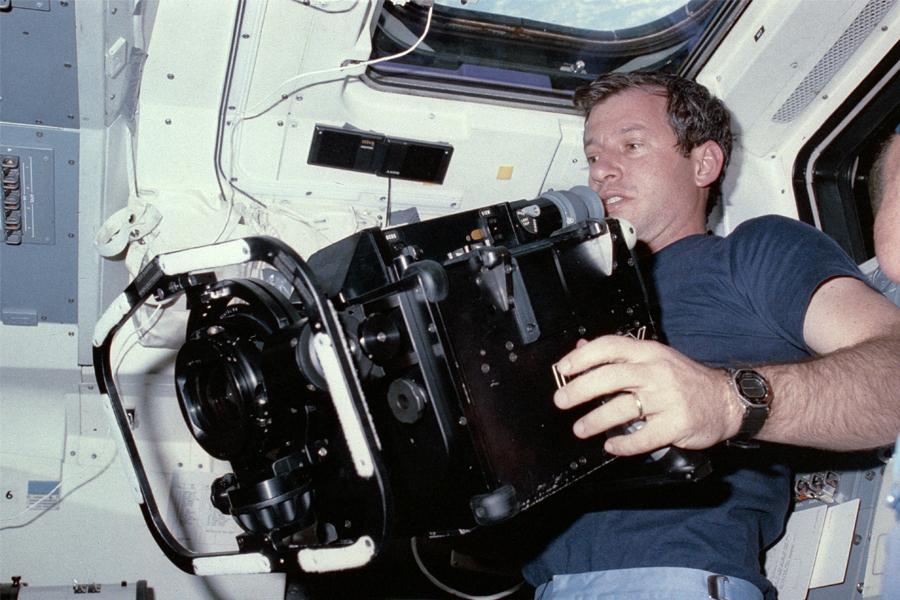
Astronaut Terry J. Hart ’68, 41-C mission specialist, held a 70-pound IMAX camera in the Earth-orbiting Space Shuttle Challenger.
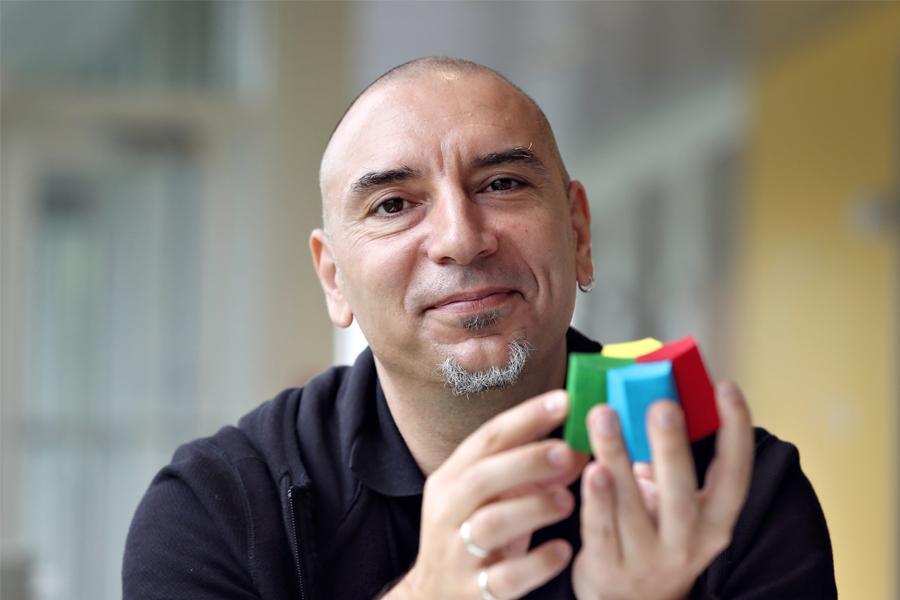
Former professor of bioengineering and chemical and biomolecular engineering, Javier Buceta, and his collaborators from Spain uncovered a previously unknown geometric shape called the scutoid.

Jill Seebergh '89 was elected to the National Academy of Engineering (NAE) in 2024 and has reached the highest level of Boeing’s technical workforce.
That sense of grounded excellence also defines Scott Willoughby ’89, a Lehigh engineering graduate and member of the National Academy of Engineering whose name is forever tied to one of humanity’s most ambitious scientific instruments: the James Webb Space Telescope.
As program manager at Northrop Grumman, Willoughby led the industry team responsible for building and launching the telescope that is now reshaping our understanding of the cosmos. The pressure was immense, the engineering unprecedented. The stakes were astronomical.
Willoughby brought to the challenge calm leadership, transparency and a relentless focus on getting it right. When loose fasteners threatened the mission, he took responsibility. When delays mounted, he doubled down on communication and clarity. He was, in every sense, the steady hand behind the lens.
Today, Webb orbits in space, capturing breathtaking images of distant galaxies and transmitting real data about the earliest light in the universe. Named the TIME Invention of the Year in 2022, its discoveries include potential signs of life on a planet situated 120 light years from Earth. It’s revealing what came before us, and what’s out there, still to come.
Jill Seebergh ’89 is another alum who has helped fuel innovation in the skies. Elected to the National Academy of Engineering in 2024 in recognition of her “contributions to materials and coating processes that enable efficient and sustainable aircraft production, performance, and safety.”
Seebergh joins an exclusive group with her election to the NAE. There were just 2,310 U.S. members and 332 international members as of her addition to the academy.
And as a principal senior technical fellow for Boeing Engineering & Technology Innovation, she’s reached the highest level of Boeing’s technical workforce over her more than 25-year career with the company.
While applying her research to practical problems in the aerospace industry, Seebergh has devised innovative solutions that have generated a robust portfolio of patents, with 25 U.S. patent applications published, of which 12 patents have been granted and 13 are pending. All inventions have also been filed in other countries, with patent grants in the European Union (8), Australia (5), and Canada (4) to date. Of note are patents and patent applications pertaining to activation methods, anti-icing coatings, hybrid coatings, inkjet-printed livery, and composite coating systems, all of which have been reduced to practice and are used on production and/or demonstration aircraft.
There’s also Terry J. Hart ’68, who took to the skies both here on Earth and even beyond its atmosphere. A United States Air Force fighter pilot, then a NASA astronaut and later a telecommunications executive, Hart was aboard the STS 41-C Challenger, NASA's eleventh Space Shuttle mission, launched from Kennedy Space Center on April 6, 1984.
On that shuttle mission, in which crew members logged 168 hours in orbit above the Earth, he operated the Remote Manipulator System that retrieved and repaired the Solar Max satellite—the first such repair in orbit.
In 2004, he brought that real-world aerospace experience back to Bethlehem, connecting the night sky of his early studies with the classroom and research labs of today to teach and mentor future engineers. Hart joined the university’s faculty and is still a member today as a teaching full professor of Mechanical Engineering and Mechanics in Lehigh’s P.C. Rossin College of Engineering and Applied Science.
From plotting asteroids in 1910 to naming shapes nobody knew existed, from inventing new materials to exploring galaxies light-years away, Lehigh has never been a place for surface-level curiosity. It’s where people go to seek real answers to real-world questions.
At Lehigh, discovery is never just theoretical. It’s about legacy, what endures and discovering solutions with real-world applications.