
Grown Through Purpose: A Campus Living Legacy
At Lehigh, innovation takes root in something real. Like the trees that define our campus, which were planted, nurtured and preserved over generations, our community is deeply connected, growing together in an environment where ideas can take shape and flourish. The trees stand as living proof of a university that builds with purpose, connects with care and grows something lasting.
Getting your Trinity Audio player ready...
Since its founding, Lehigh has made a tangible, lasting commitment to preserving and nurturing the natural environment that defines South Mountain.
Lehigh’s lush, tree-filled campus is integral to the university’s identity and unique sense of place. It’s not only historical—it’s intentional. The real commitment to preserving natural beauty for generations to come has been ingrained in the university’s development over time and continues to be a priority in plans for the future as outlined in Making the Future: A Plan for the Lehigh Campus, a 30-year framework to guide decision-making in support of the Lehigh Strategy. The framework recognizes what Lehigh has always known: our campus is not defined by buildings alone, but by the seamless connection between people, place, and environment. Our forested mountainside, historic arboretum and woodland trails are not apart from campus; they are integral to how we live, learn and thrive together, shaping both our identity and our well-being.
Today, that ethos is expressed in a campus that functions as an interconnected whole, where spaces with distinct histories and purposes, from natural woodlands to reimagined research facilities, are linked together to create a continuum of discovery.
The legacy of Lehigh’s stately trees can be traced back to the efforts of Henry S. Drinker, Class of 1871 and the university’s fifth president. Drinker’s work was pioneering. After chestnut blight devastated Lehigh’s campus forests in the early 1900s, causing the perishing of all chestnut trees, Drinker directed the planting of more than 100,000 trees across campus. The spectacular mature trees on campus today are rooted in Drinker’s early efforts to restore the mountainside canopy. His vision helped shape the tree-filled landscape that generations of Lehigh students would grow to know, explore and call home.
Those stately trees stand as real, living monuments—witnesses to a century of Lehigh history and stewards of its future.
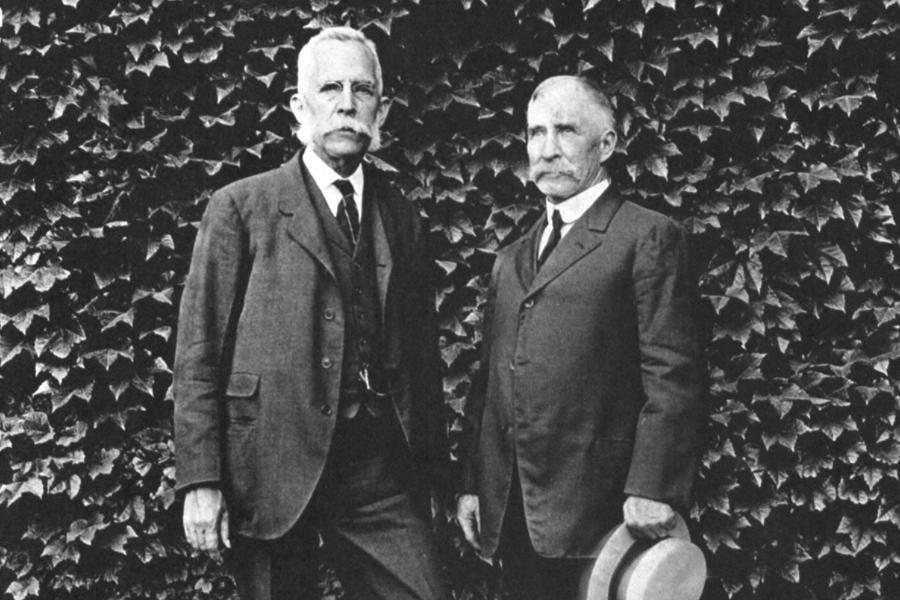
Lehigh’s fifth president, Henry S. Drinker Class of 1871, alongside classmate Frank F. Drinkhouse at a Lehigh reunion.
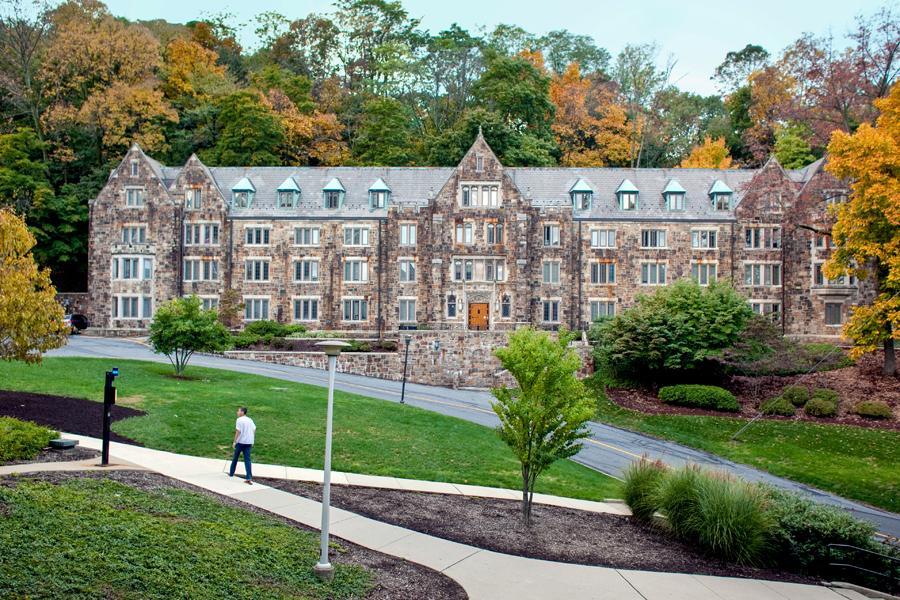
Drinker is part of a cluster of massive, classic collegiate stone buildings—including Dravo House and Richards House—historically known as the "Freshman Quad".
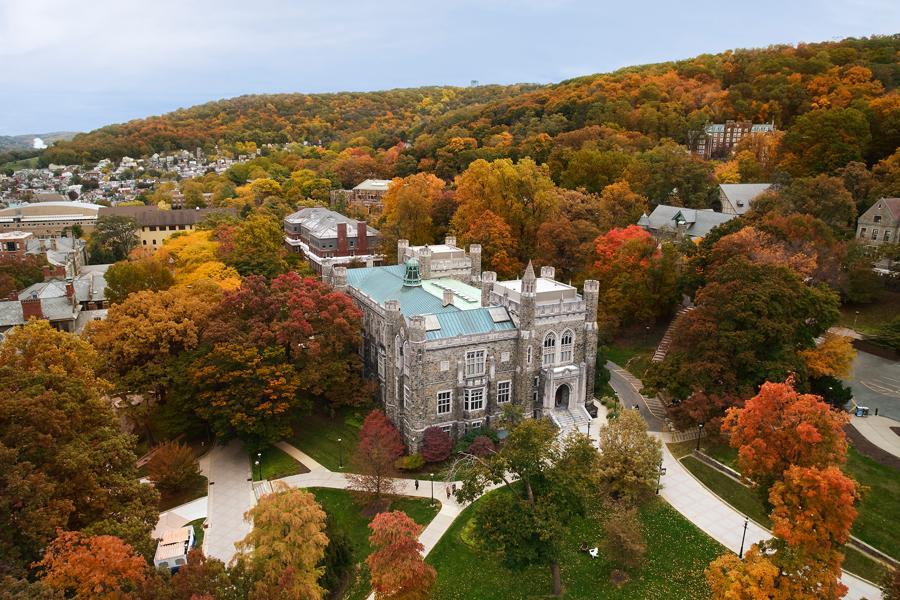
The spectacular mature trees on campus today are rooted in Drinker’s early efforts to restore the mountainside canopy.
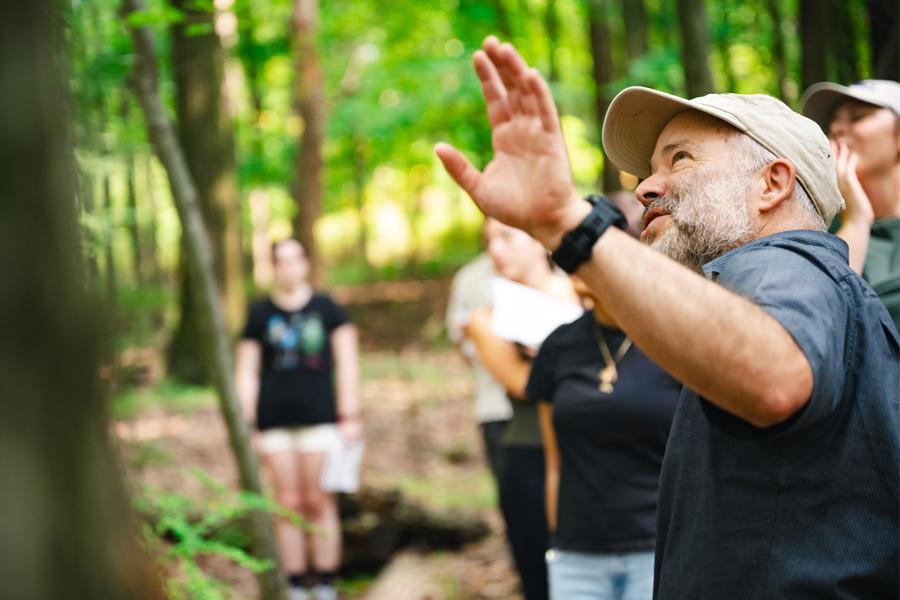
In 2011, professor and chair of Earth and Environmental Sciences, Robert Booth, uncovered a collection of pressed plants in the basement of Williams Hall. He was able to retrace the boundaries of the long-forgotten forest with help from Lehigh’s library and archives staff.
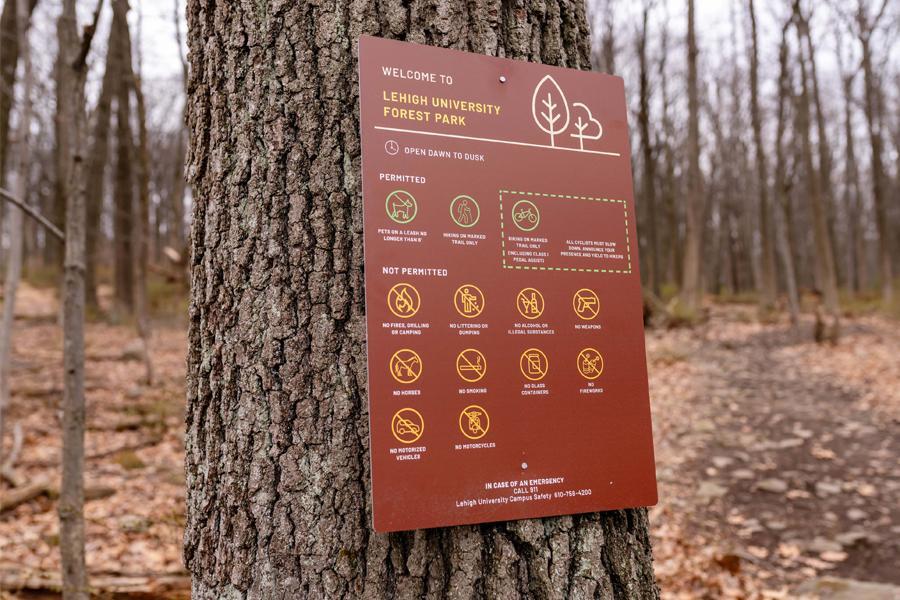
Lehigh opens a public hiking trail within its 760-acre Forest Park on South Mountain in Bethlehem in Spring 2026.
An 11-acre arboretum, populated with native tree species, was established in the early 1900s, and later, an experimental forest used as a living classroom for students. The arboretum and experimental forest were lost to time and later rediscovered in 2011 by Robert Booth, professor and chair of Earth and Environmental Sciences. Now part of the Forest Park area of campus (a forested landscape that links Lehigh’s 1,600 acres from the Sayre Park residential area and the historic core and Southside at the base of South Mountain to Mountaintop and Goodman), they once again serve as real-world laboratories for students and faculty. Forest Park is also an integral component of Lehigh’s Student Mental Health Resilience Initiative and building a future where exploring nature is part of student life at Lehigh. As the woodlands transform with improved pathways and trails, it will become a welcoming place on campus where students can experience the healing and rejuvenating benefits that the natural environment has on well-being.
As an accessible natural resource for the campus and community, Forest Park complements Mountaintop’s role as a hub for innovation, interdisciplinary research and collaboration, and industry partnerships, linking our past, present and future. Set on the highest point in Bethlehem with captivating views of the Lehigh Valley, Mountaintop was once Bethlehem Steel Corporation’s research facility. Mountaintop serves as a place for inspiration and discovery, bridging together the past and the present and connecting the entire Lehigh campus through collaboration, innovation and beauty. Each space has its own character, but together they illustrate how Lehigh uses its 1,600 acres as a platform for exploration, collaboration and inspiration.
Lehigh’s campus is more than its buildings or its trees. It is a connected ecosystem where nature, history, community and innovation continually intersect. It’s a place that grounds us, challenges us and invites us to create the future. It’s part of what grounds us, connects us and inspires us to grow.