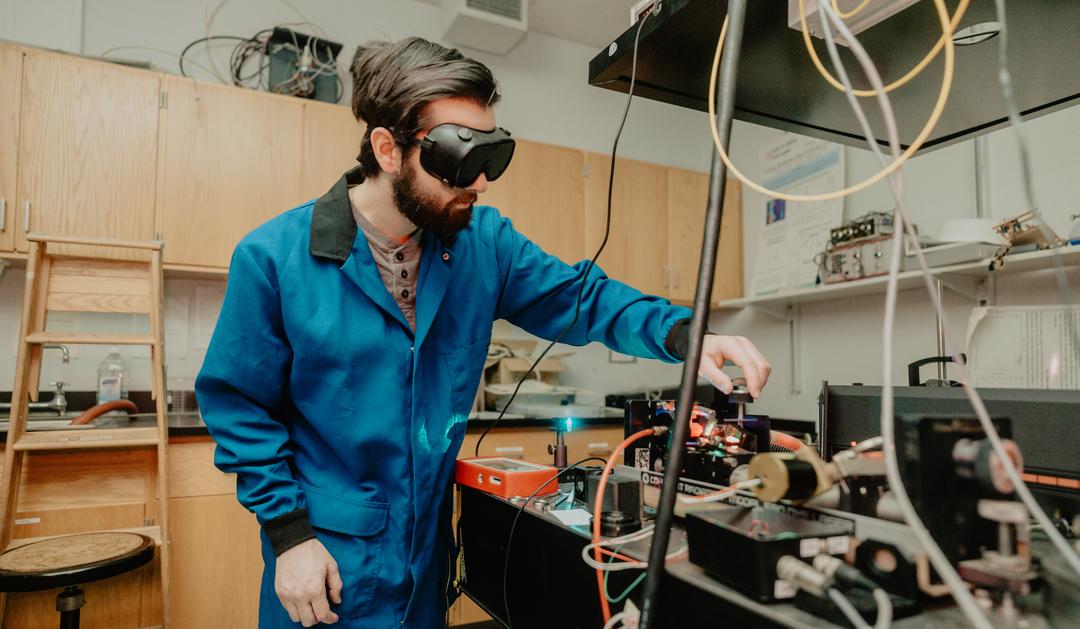
Photograph of a researcher in a blue lab coat wearing goggles in a laboratory.

Anthony Tsekrekas, a Pasteur Partners Ph.D. (P3) Program student.

Lehigh’s Ph.D. P3 Program Model and Recommendations Reflected in New NSF I-PhD Scholars Program

Getting your Trinity Audio player ready...

Features of the P3 Program, which prepares STEM doctoral students for careers in industry through hands-on research opportunities, will be implemented into an NSF-supported, $47 million pilot Industry-Integrated Ph.D. program.

Story by

Lauren Thein

Photography by

Asgar Ali '23

For seven years, Lehigh’s Pasteur Partners Ph.D. (P3) Program—a student-centered STEM doctoral training program developed with support from the National Science Foundation (NSF)—has blazed new trails in STEM doctoral education in the United States, creating opportunities for Ph.D. students to gain hands-on research experience in industry and translate theory into practice outside of academia.

Now, features of the innovative P3 Program, as well as recommendations from a 2025 National Workshop on the Formation of Industry-University Partnerships for Doctoral Training hosted by Lehigh’s P3 Program research team, are being implemented into an NSF-supported, $47 million pilot Industry-Integrated Ph.D. (I-PhD) program. Led by University-Industry Demonstration Partnership (UIDP), the new I-PhD Scholars Program is a four-year Ph.D. model that will provide more than 250 doctoral students nationwide with industry research experience and development as part of their graduate education.

“This is a major step in decades for bringing doctoral training in the U.S. at par with competitors in Europe and elsewhere,” said Himanshu Jain, T.L. Diamond Distinguished Chair in Engineering and Applied Science, professor of materials science and engineering and principal investigator of the P3 Program.

Lehigh’s P3 Program and NSF's pilot I-PhD Scholars Program aim to address a common gap in doctoral education in the U.S. While most doctoral programs in the U.S. are structured to prepare students for academic careers, the majority of graduates enter careers outside of academia. Among doctoral graduates in engineering, physical sciences and computer and information sciences who report definite post-graduation employment commitments, more than 65% were headed to industry, according to NSF's Survey of Earned Doctorates.

“Professors like me, we continue to train the students as though they will become professors, so there was a big mismatch,” Jain said. “We want to train these students so that they can not only become professors, but also be good in industry.”

Putting P3 into Practice

To develop innovative technical solutions for complex challenges and to meet societal needs, today’s STEM Ph.D. students require a combination of skills to prepare them to be successful in non-academic careers, especially in industry, Jain said.
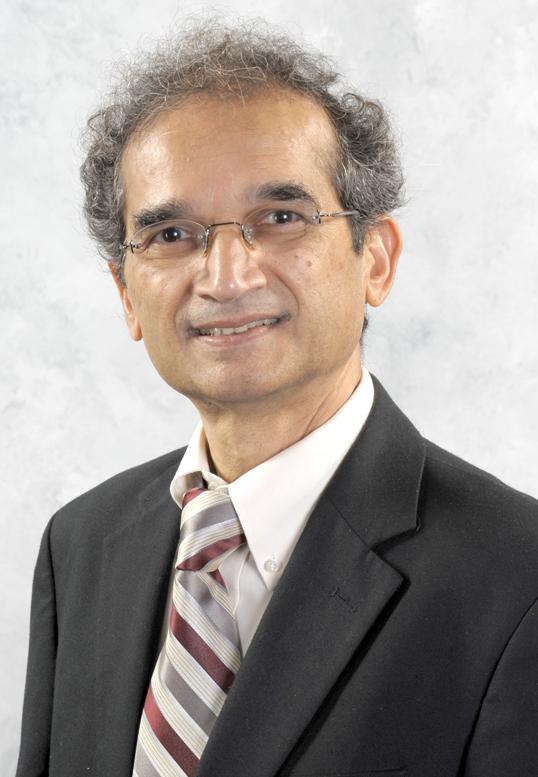
Photograph of a man wearing glasses, a suit, and a striped tie.

Himanshu Jain, T.L. Diamond Distinguished Chair in Engineering and Applied Science, professor of materials science and engineering and principal investigator of the P3 Program

While traditional Ph.D. programs have historically been successful in providing technical skills critical for positions in academia, Ph.D. students interested in careers in industry need to develop professional skills, practical experience and a research mindset to solve real life problems in addition to technical training, Jain said.

To fill this gap, Jain and co-principal investigators Anand Jagota, vice provost for research and professor of bioengineering and chemical and biomolecular engineering, and Volkmar Dierolf, AGF distinguished professor of physics and materials science and engineering, developed and tested the P3 model at Lehigh in collaboration with Corning, a global leader in advanced ceramics and optical materials, with support from the NSF’s Innovations in Graduate Education (IGE) program.

Named after Louis Pasteur, a researcher and founder of medical microbiology who was motivated to solve urgent challenges through fundamental systematic investigations, the P3 Program provides four years of financial support for qualified prospective doctoral candidates. The program focuses on training Ph.D. students in use-inspired research through industry-university partnerships with corporate and national lab partners such as Corning, Michelin, GTI Energy, NASA, Air Force Research Laboratory, Brookhaven National Laboratory and Oak Ridge National Laboratory.

There are four distinctive features of the P3 model that are incorporated within traditional Ph.D. programs. One key feature is ensuring that each student in the program is co-advised by a university faculty member and an industry researcher, providing mentorship from both academic and industry perspectives during the research training and collectively defining the dissertation topic with the student.

Other features include participation in a pre-program summer internship, which allows each student to gain a broad perspective of a research topic of interest before starting their degree, and participation in an industry residency where they conduct part of their dissertation research at a partner industry location.

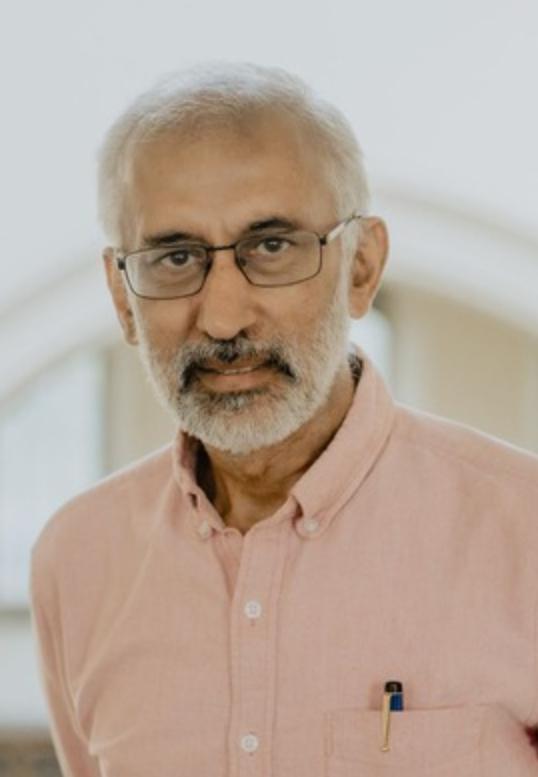
Photograph of a man wearing glasses and a pink shirt.

Anand Jagota, vice provost for research and professor of bioengineering and chemical and biomolecular engineering

Additionally, students receive training in essential professional skills such as project management, communication, leadership and team-building.

Jagota said his Ph.D. students enrolled in the P3 Program have worked with Michelin and presented their research to two employees at the company every five to six weeks.

“They get feedback and ideas, they get told if this will work or why it won't work,” Jagota said. “That is ongoing training for the students.”

Jain and Jagota said there has been tremendous interest in the P3 Program from prospective doctoral students, and the program continues to be well-received by Ph.D. student participants.

"We saw it was a great success,” Jagota said. “All the students who participated liked it and there was huge demand for it.”

Exploring Solutions for Transforming Doctoral Education

Jain said the practical implementation of the P3 Program faced challenges, including intellectual property, research timelines and long-term collaboration. To discuss solutions to those challenges, Lehigh hosted a National Workshop on the Formation of Industry-University Partnerships for Doctoral Training in August 2025 in Washington, D.C., inviting 77 leaders from industry, academia, funding agencies and international institutions to explore solutions for transforming doctoral education through industry-university partnerships.

The group made nine recommendations for universities, industry, funding agencies and students, representing an important first roadmap for strengthening STEM doctoral training in the U.S. Key takeaways included approaching partnerships strategically, introducing flexibility into Ph.D. requirements, developing standardized agreement templates related to intellectual property and publications, and exploring alternatives to the traditional Ph.D. model.

In response, the NSF announced the pilot UIDP I-PhD Scholars Program, incorporating features of the P3 Program model and some of the recommendations from the workshop. The program's initial cohort starts in Fall 2026, and the results will inform future adoption and scaling of the program, with larger cohorts entering in subsequent years subject to partner readiness and program capacity.

Lehigh is preparing to submit for the UIDP I-PhD Scholars Program by working on identifying interested faculty and matching them to potential industry partners.

Jagota said having the success of the P3 Program recognized on a national scale through the implementation of the UIDP I-PhD Scholars Program has been a rewarding, full-circle moment.

“It's very gratifying because I think it'll really have an impact,” Jagota said. “It's one of the good things that we were able to do out of Lehigh.”

Story by

Lauren Thein

Photography by

Asgar Ali '23