



Researchers with Lehigh University’s Center for Catastrophe Modeling and Resilience, led by anthropologist David G. Casagrande, have identified two urgent challenges the United States faces in adapting to climate change: a potential disaster insurance crisis and the lack of comprehensive relocation policies for communities facing chronic flooding.
A new paper, Climate Change and Insurance: Embracing Resilience for Private Market Survival, published in Sustainable Development warns that climate change is undermining the private insurance and reinsurance industries. Traditional methods for spreading natural disaster risk—such as premium pricing, peril region pooling and catastrophe bonds—are no longer sufficient, which has led insurers to abandon high-risk markets. The study, co-authored by Casagrande, proposes that the solution is a pivotal investment in physical resilience through Public-Private Partnerships (PPP) utilizing financial tools like resilience bonds.
"The insurance market is reaching a critical inflection point where simply raising premiums or pulling out of states is not a sustainable long-term strategy for the industry or the public," said Casagrande. "Our findings show that financial sustainability for the private insurance market can be achieved, but it requires a strategic, forward-looking investment in resilience to reduce losses before they happen.”
The authors emphasize that the increasing impact of disasters has made the cost of business interruption often significantly higher than the physical damage. To address this, the researchers propose the mechanism of resilience bonds. This financial tool, issued via a PPP, is designed to ease the financial burden on insurance companies while promoting social equity. By calculating how much risk will be reduced through resilience improvements, insurance companies provide the necessary data for local governments to issue the bonds. These investments simultaneously enhance the insurer’s financial sustainability and enable the expansion of coverage to vulnerable populations and marginalized communities, who often suffer the most from slower recovery times and lack the capital for these resilience improvements.
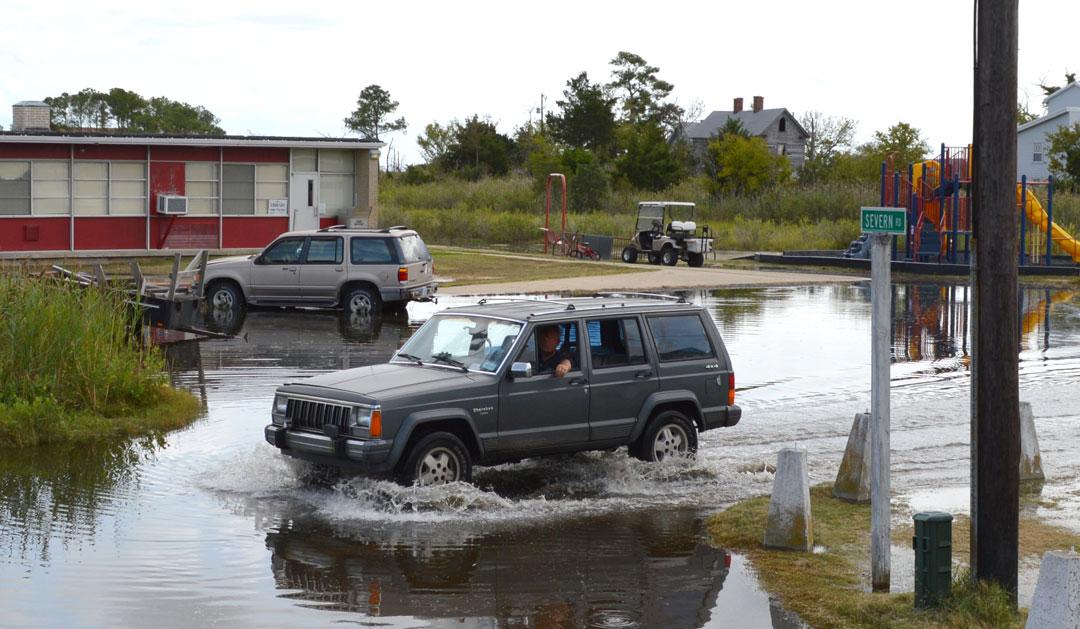
Their research also highlights a critical need for a national, well-funded policy framework to help individuals and communities relocate from flood-prone regions. Through a combination of literature review and interviews, the researchers uncovered significant resistance to relocation, even among those already experiencing repeated flooding, and found that federal officials have not adequately addressed the insurance crisis and the relocation challenge.
“I did not realize how serious the insurance challenge is or how resistant people would be to relocating,” Casagrande said. “We need to start addressing both of these problems now before they become unmanageable.”
Funded by Lehigh University internal grants, the research expands the role of catastrophe modeling in shaping public policy. By applying modeling insights to financial and social systems, the team demonstrates how science-driven approaches can guide more equitable and effective climate adaptation strategies.
The researchers recommend issuing resilience bonds at both national and international levels and developing a coherent, well-funded managed retreat program. This retreat program, according to Casagrande, facilitates people moving out of flood-prone areas when policies like resilience bonds fail, because the risk cannot be reduced enough through structural improvements that meet a benefit-cost estimation requirement.
“Because we’ve failed to reduce greenhouse gas emissions, we now have to innovate new ways to adapt,” Casagrande added. “Our research shows how catastrophe modeling can help policymakers make smarter, fairer decisions about where and how to build resilience.”
Casagrande headed two other pieces: Ecomyopia on the Chesapeake: Social and Cultural Barriers to Climate-Induced Managed Retreat and Victims of Resilience: An Evaluation of Social Vulnerability's Applicability to Disaster Justice.
Casagrande’s findings on Ecomyopia reveal how cultural identity and social narratives can strongly influence how communities respond to environmental threats. Through his research on the Chesapeake, Casagrande found that many residents refuse to acknowledge the long-term risks of sea-level rise because doing so would challenge their deep-rooted sense of place and heritage.
Rather than accepting managed retreat as a response to worsening floods, islanders framed the problem as one of erosion—a threat that could be solved through engineering and shoreline protection. Casagrande describes this as a form of ecomyopia, or environmental short-sightedness, where people selectively interpret information to protect their identity and social cohesion rather than confront ecological realities.
With regard to Victims of Resilience, Casagrande’s research published with John Roper on the Social Vulnerability Index (SVI) and post Hurricane Katrina recovery closely aligns with the goals of the Center for Catastrophe Modeling, which seeks to improve how disasters are predicted, managed, and understood across social and environmental dimensions. Casagrande’s work highlights the limits of quantitative models like the SVI when they fail to capture historical and structural inequalities, such as the lasting effects of redlining on homeownership and recovery.
His findings show that while the SVI can identify vulnerable areas, it cannot fully explain why some communities struggle to recover, often due to systemic injustice and displacement through gentrification rather than improving resilience of the vulnerable. The Center for Catastrophe Modeling’s interdisciplinary approach, integrating data analysis with social science perspectives, mirrors Casagrande’s call for procedural justice in disaster recovery. Both emphasize that modeling disasters must go beyond measuring physical damage and consider how social structures, identity, and policy decisions shape community outcomes.
Together, Casagrande’s work and the Center’s mission underscore the need for disaster models that reflect not just risk, but the human and cultural factors that determine who recovers and who gets left behind.
This work reflects the mission of the Center for Catastrophe Modeling and Resilience at Lehigh University to advance data-driven solutions that strengthen society’s ability to anticipate, withstand, and recover from environmental and economic disruptions. By combining modeling, financial innovation, and social science, the Center aims to ensure that resilience planning serves not just infrastructure, but people and communities.
Story by Will Smalley ’25