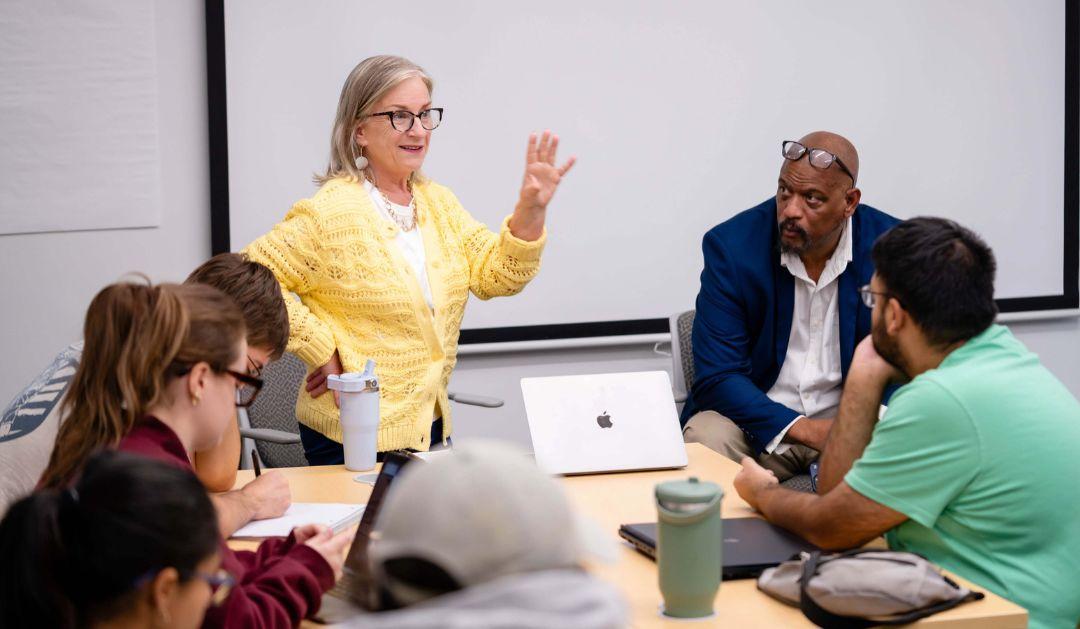
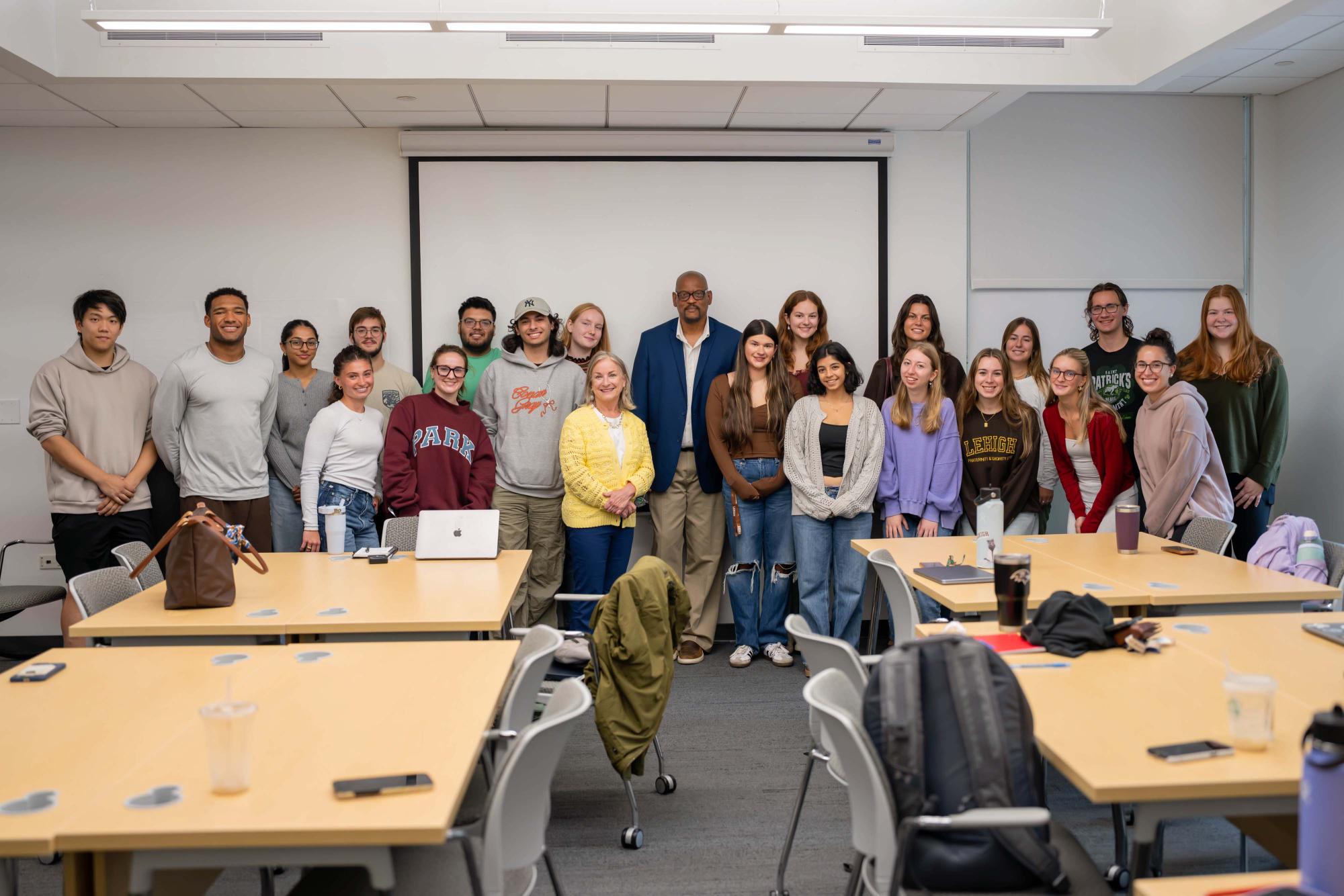
That level of interest reflects the unique opportunity for students to learn about health policy from someone who has worked across law, health care and government, said Michael K. Gusmano, interim dean of the College of Health and co-director of Health, Medicine and Society (HMS).
“As an attorney who worked in the health system and a former member of Congress, Susan is uniquely positioned to help our students understand the real-world implications of what they are learning about health in the classroom,” said Gusmano.
Lucy Napper, a psychology professor and co-director of HMS said: “One of the aims of the HMS program is to help students develop a broad understanding of how healthcare influences individuals and society, as well as the factors that shape our healthcare system. Our students come from a range of disciplinary backgrounds, and as part of our major, they study health from social scientific, humanistic, and public health perspectives,” she continued. “Susan Wild’s course provides students with an opportunity to draw on these different approaches as they consider the role of government in health care. Learning from someone with firsthand experience
of health care policy reform gives our students a valuable perspective on the complexities of health care in the U.S.”
The guest speakers Wild can bring into the classroom are part of what makes the course distinctive.
“If somebody says to me, ‘I really need to connect with somebody who knows about this subject,’ the chances are, I know somebody like that,” she said. “I love connecting people to other people.”
Wild recently connected a former client, a trauma surgeon from Dominica, with someone from the island who had come to the United States seeking medical care. For Wild, it was a natural extension of the relationships she has built throughout her career.
It is also, she said, an example of something technology cannot replicate.
“AI can do a lot,” Wild said. “But it can’t pick up the phone and [make a genuine human-to-human connection for someone].”
The power of connection
Wild sees human connection as important not only professionally, but also to health and well-being. People who are engaged with their communities, volunteer and maintain close relationships tend to be healthier and live longer, she said.
“I don’t think there’s anybody that doesn’t have some need for human connection at some level,” Wild said.
Technology can create new forms of connection. Wild pointed to Zoom during the COVID-19 pandemic, which helped people maintain relationships across long distances. But she worries about what is lost when digital interaction replaces physical proximity.
She remembers the early years of her legal career, when much of her professional development happened through walking into a colleague’s office, asking for advice or sitting with a senior attorney who reviewed her writing line by line.
“I gained so much from being in the office—the water cooler conversation, but also going next door and asking somebody for advice on how we approached a problem,” she said.
Being on campus is part of the appeal of this new chapter for Wild. She said she was excited to be around students again, eat lunch on campus and become part of university life.
“I was really excited by the prospect of being on campus and seeing people,” she said.
Empowering students to make a difference
One of the most important lessons Wild hopes students take from the course is that they can influence public policy.
Early in the semester, she asked students whether they believe healthcare is a human right. Beyond the substance of that debate, she wants them to understand that they have a role in shaping the issues they care about.
“People don’t realize how much influence they can have over the policy process,” she said.
That influence does not require a career in politics. Whether students become policymakers or simply advocate for issues important to them, Wild wants them to understand that they can participate.
“What I really hope to impart to them is that you really can have an influence over policy,” she said. “And what I really hope they take away from this class at the end is that they can have an impact.”
After a career spanning law, public policy and six years representing the Lehigh Valley in Congress, Wild is bringing her experience into the classroom.
“I’ve had all these great honors in my life,” Wild said. “It is also a great honor to be asked to teach at a school like Lehigh, and I’m really proud.”