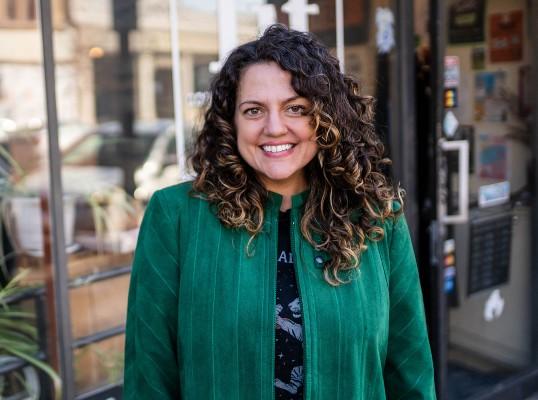
“One of the most interesting things that I've learned, not expecting this, is the connection people make with trash,” Jackson says. “In a community with a strong history and sense of pride and belonging, trash is really divisive.”
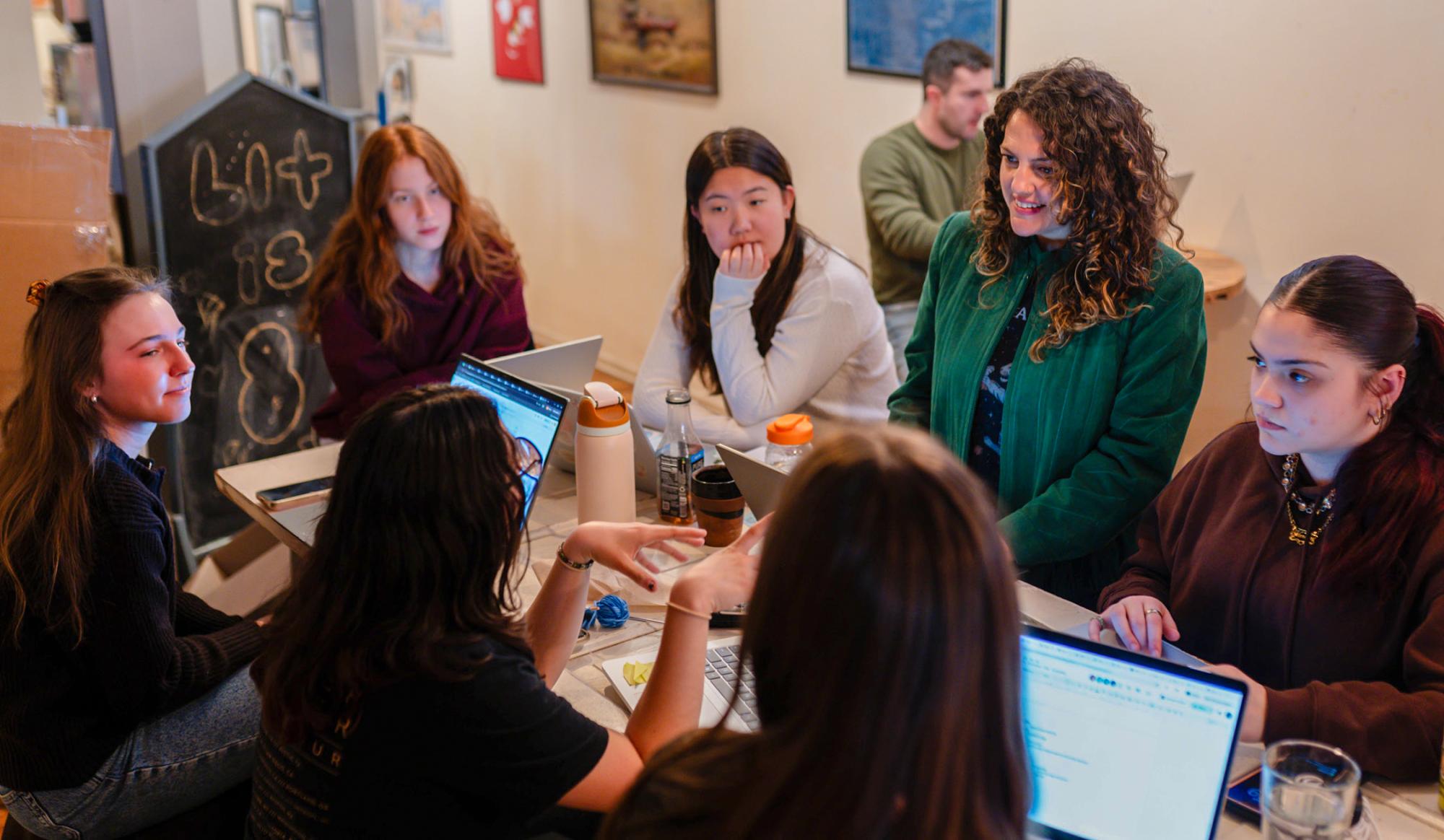
As part of their work, the team is conducting walking audits, addressing resident concerns and suggesting recommendations for city-wide change. They are also investigating the impact of trash and pollution using Community-Based Action Research methods while focusing on improving the health and well-being of the community.
CONNECTING STUDENTS AND THE COMMUNITY
New to the College of Health at Lehigh, Jackson was teaching Community-Based Participatory Research methods for the first time in the spring of 2023.
“The point of the class is to teach students how to do relational, reciprocal, equitable research in community,” Jackson says. “And the College of Health’s mission is to improve local health outcomes with communities. I was starting my own career here in community-based work, building relationships and trust and figuring out where the room to collaborate around environment and health was.”
Jackson says she attended every local meeting she could find, including those for the SouthSide Task Force, SouthSide Arts District, Community Action Development Bethlehem and others. She started getting to know people in the community, and tried to understand which topics were most important— there was an overwhelming love of community and a concern about trash.
She thought connecting those she talked with to students who could help take on work to strengthen the community would be a perfect partnership and community members agreed. She brought the issues to her class and from there, it eventually blossomed into a social impact fellowship and became part of Jackson’s research agenda.
Students began going to community meetings, doing much of the same as Jackson had been doing. The team conducted over 60 interviews with Bethlehem residents and what they realized, Jackson says, was that people were interested in a map and more information. Residents wanted to know where trash was accumulating and how to affect change. Policy makers wanted to know how the residents were feeling, the impact on health and creative solutions.
CREATING A MAP
As the project group began to discuss a map that highlighted trash accumulation hot spots, they wanted to be careful to highlight issue areas without negatively impacting residents or perceptions of the area.
“There are areas in general where there's more trash, but highlighting those spots turned out to be against our principles of environmental justice,” Jackson says. “We don't want to show people's homes or overlook the structural issues that lead to trash.”
Student working groups pivoted from a map of trash hot spots to one highlighting work the community was already doing to strengthen their neighborhoods. The map, they thought, could also help get volunteers the tools they needed, celebrate community pride, and help people feel more connected to their neighbors.
Part of the inspiration stems from Guadalupe Martinez, known as Ms. Lupe. Jackson says the Indian Hill neighborhood resident has been going out and picking up trash, talking to neighbors and inviting others to join her.
“She’s built a coalition of people,” Jackson says.
The team felt emulating what Lupe is doing would be a great starting point. By having neighbors meet each other it’s possible they’d start to talk, share resources and even coordinate their trash collection day.
“These organic things start happening, which, out of our research, we realized is what people are really missing—those touch points with one another,” Jackson says.
Jackson says due to high rates of turnover in neighborhoods, people have expressed that they don’t know their neighbors anymore. They went from looking out for each other to not even knowing one another. Trash has become associated with that, she says, because the residents feel that nobody cares.
“[Waste management is] an interesting predicament, because the city gets complaints about trash, and they do their best to respond, but because trash is not managed by the city, there's not much they can do besides enforcement, and that leaves people feeling frustrated and the city feeling frustrated,” Jackson said. “Everybody was coming at it from a different angle, but still feeling really frustrated by the presence of trash and looking for realistic solutions.”
ADOPT A SPOT LAUNCHED
The team is launching its pilot program “B Beautiful” this month.
Work includes the publishing of a website, which includes their “Adopt a Spot” map of South Bethlehem. The map allows visitors to mark locations and add ideas they have for projects.
“[It will be] an open map and allow people to go on and say, ‘This street means a lot to me…and I want to keep it clean,’ or ‘I want to build a free library there’ or something,” Jackson says.
Once those ideas are uploaded to the map, Jackson says the team will see who signed up for different locations and using a communications app, they’ll connect neighbors. That will allow those interested to meet organically to host cleanups or other events based on the ideas pitched. Jackson says they’ll provide the tools needed, and if funding is necessary, try to connect volunteers with possible sources of funding. Jackson says her team will also host its own cleanups and events.
Trash is a complex issue, both locally and globally, and it cannot be solved by individual actions alone, says Jackson. The team continues to study systemic solutions while collaborating with the city. The extensive amount of information gathered through case studies, community meetings, community partnerships and resident interviews will be preserved for the public as well. In addition to the map, the team plans to add that information, along with published “mini reports” on different topics related to trash and the City of Bethlehem, to the website.
The team will launch Adopt-a-Spot at the annual Southside Clean Up on April 18 at Yosko Park.