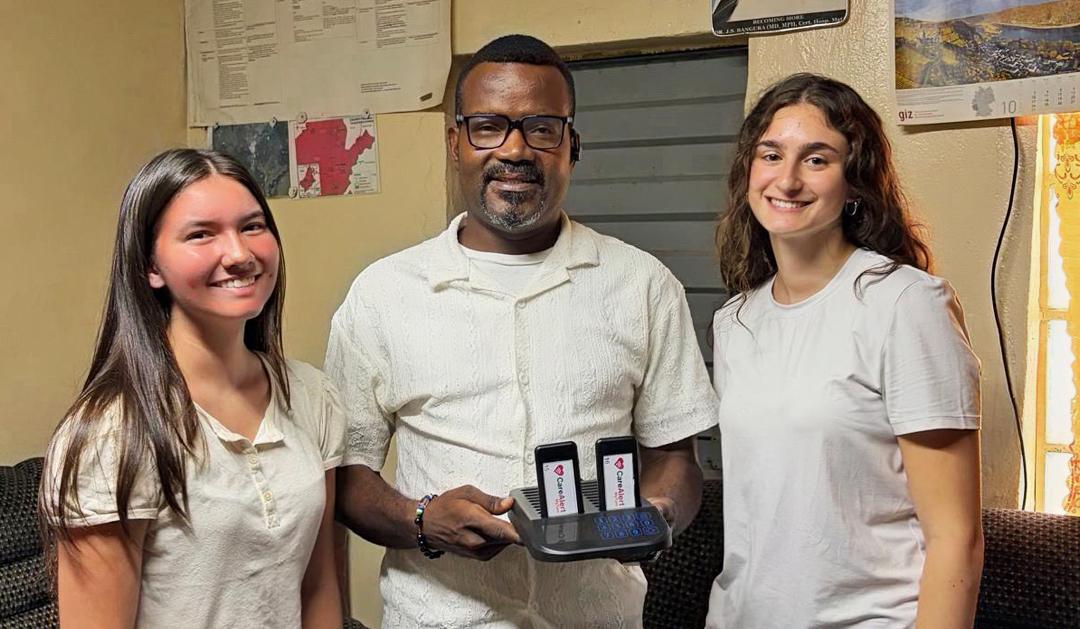
Photograph of three smiling people holding a device with two smartphones.

Lehigh Students Win 2026 Davis Project for Peace Awards

Getting your Trinity Audio player ready...

Two teams from Lehigh’s Global Social Impact Fellowship, CareAlert and NewTrition, build innovations for maternal health and population-wide nourishment in Sierra Leone.

Story by

Katie Clarke

Two groups of student researchers working on global projects in Makeni, Sierra Leone through the Office of Creative Inquiry have won $10,000 Project for Peace Awards. Projects for Peace is a global program that encourages young adults to develop innovative, community-centered and scalable responses to the world’s most pressing issues. With a commitment to finding real solutions to global problems, these Lehigh student researchers are doing just that.

“Projects for Peace helps students translate promising ideas into real-world impact through research, learning and entrepreneurial engagement,” said Khanjan Mehta, vice provost for Creative Inquiry. “CareAlert and NewTrition combine technical rigor, cultural humility and entrepreneurial resilience to advance evidence-based solutions for improved maternal health and nutrition.”

Improving Maternal Health Outcomes Through Portable Technology

Students on the CareAlert team focus on improving maternal health outcomes by providing a way for pregnant women to get notified about upcoming appointments and check-ups and decrease their wait time once they arrive. Through programming technology, the team developed the portable and wearable devices MyTurn and WellBodi.

The team’s continuing fellows include Lillian Wu '27, Regina Ruiz Brictson '27, Kavya Famolari ‘27, Olivia Meyer ‘27 and Marianna Angle '28, with new members Nova Afber '28, Olivia Dubrow '28, Claire Schwartz '28, Maria Garcia Rodriguez '29 and Madison Morita '28.
The waiting room experience is really, really different than it is here, and it's actually a deterrent to returning to care.

Lillian Wu '27

In low to mid-income areas in Sierra Leone, patient follow-up is a significant challenge due to high healthcare costs, lengthy travel distances, limited health literacy and social influences that all contribute to missed appointments.

“The waiting room experience is really, really different than it is here, and it's actually a deterrent to returning to care,” said Wu, a chemical engineering major who conducted fieldwork in Sierra Leone last year. “Some wait times are over six hours. And imagine doing that—you're pregnant, you're sitting on a hard, wooden bench, your other kid is like hanging off of you, and you know you still have a day of work at home.”

The team’s goal is to provide the women with certainty that their appointment will happen when scheduled. Wu said instead of relying on cell phone use, MyTurn eliminates barriers created by inconsistent cell networks, so patients aren’t straining resources having to pay for more phone credits or more time, enabling more constant communication between the patient and the healthcare provider.

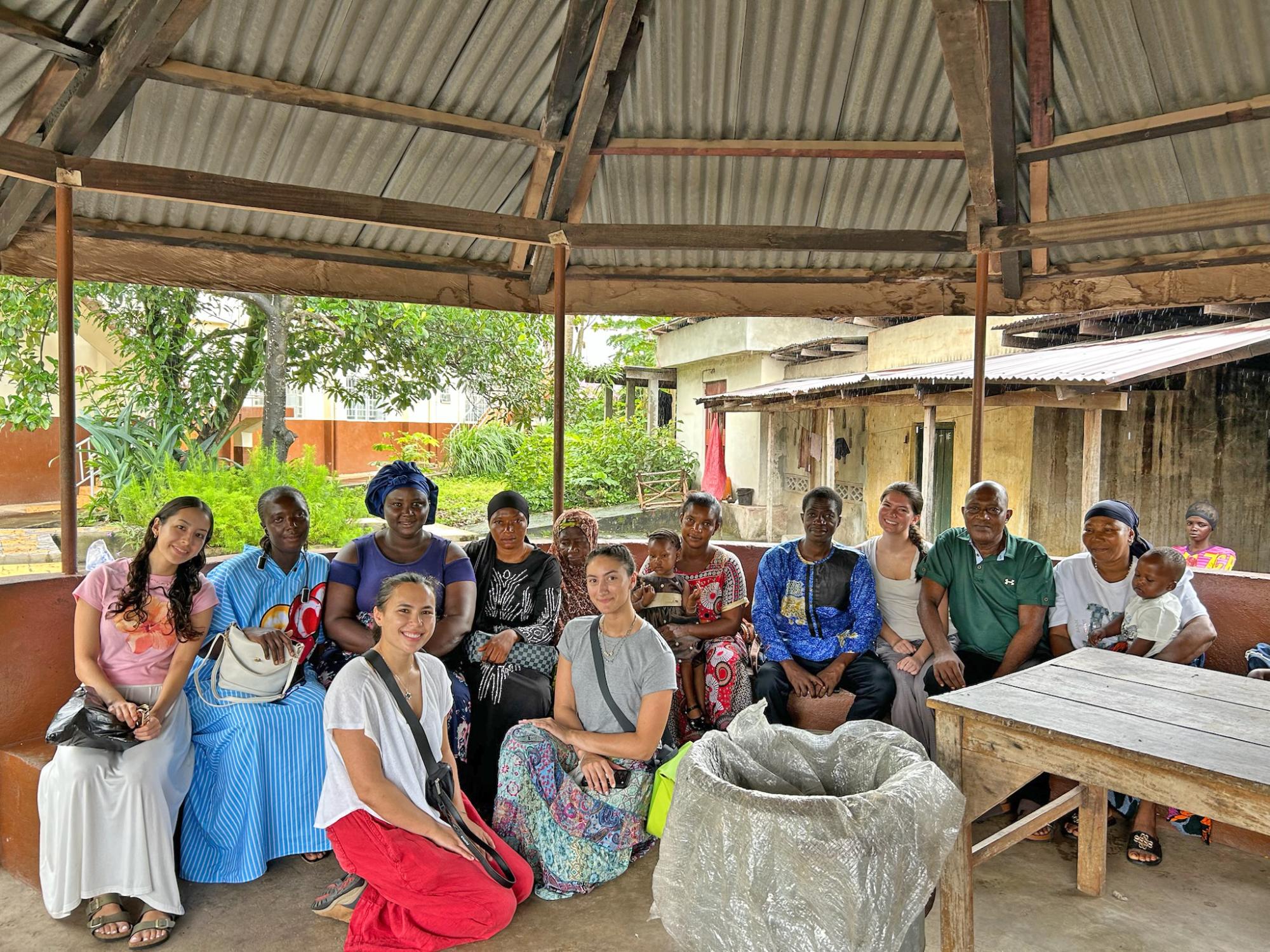
A group of people sitting together under a large gazebo with a corrugated metal roof.

MyTurn has progressed beyond prototyping and is moving toward broader implementation. The team has confirmed approximately 40 clinics and developed plans to introduce the technology at each location. By the end of 2026, MyTurn is expected to be deployed at more than 50 clinics and hospitals, helping streamline operations, reduce patient wait times and strengthen communication between patients and healthcare providers.

“That device would be given to women in waiting rooms, so they know their appointment is upcoming, like if you were at the Olive Garden and they give you a pager that you sit with for a minute until it buzzes, and you know to go get your food,” Wu said.

During fieldwork this year, Afber, a biology student on the pre-med track, said the team visited clinics, gauged interest in the product and built relationships with healthcare facilities that could potentially implement the system. Lehigh students understand the value of connection and supporting an initiative bigger than themselves.

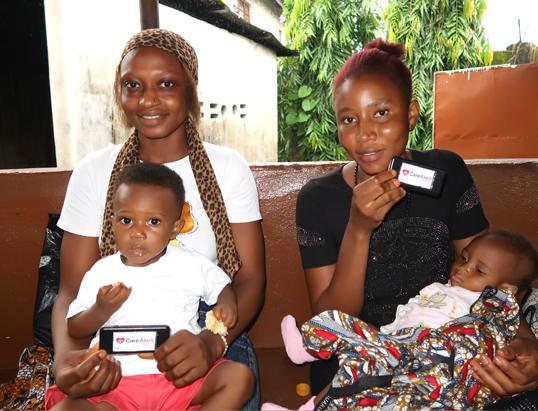
Photograph of two women and their children holding small devices with a red heart logo.

A large portion of the Projects for Peace funding will support the implementation of MyTurn, including having the devices manufactured, shipped and distributed in Sierra Leone.

The team’s second product, WellBodi, is a long-range device designed for the patient to take home. When it's time to return for an upcoming appointment, doctors would be able to alert their patient as a reminder. Before fieldwork this summer, the team envisioned a wearable device, adjacent to the style of a Fitbit or another kind of handheld device that could be attached to a lanyard and worn around the neck or hung up in homes.

When the team went to test the product in Sierra Leone this summer, they found that the device lost connection within .01 miles of reliable range, Afber said. Having planned their fieldwork around a much larger advertised range, the team pivoted quickly, and used the Projects for Peace funding to navigate the new and unexpected circumstances.

“The Projects for Peace funding supported several different parts of our fieldwork and helped us adapt when our original plans changed,” said Afber. “I think the biggest thing I would add is how proud I am of the 2026 CareAlert team and how we handled the challenges we faced during fieldwork.”

Photograph of four smiling women posing together in a sunny outdoor setting.

Tackling Malnutrition Through Fortified Products

Nutrition-related diseases are responsible for up to 40% of early childhood deaths in Sierra Leone, with malnutrition remaining as one of the most urgent public health challenges. The NewTrition team works alongside local partners, small business and entrepreneurs to design affordable, shelf-stable food products fortified with essential micronutrients such as Vitamin A, Vitamin B12, zinc, iodine, folate and iron.

“In my role overseeing public health for more than half a million people in Sierra Leone, I see the urgency of challenges such as maternal health and malnutrition every single day,” said Dr. Joseph Sylvanus Bangura, district medical officer for Bombali District. “Our work with Lehigh is about listening, testing and learning together, and turning those lessons into real solutions that work for our communities.”

“The overarching problem we're trying to address is micronutrient deficiency, providing access to micronutrients, making them affordable and accessible, and addressing any gaps in information or knowledge for the general public where possible,” said Samantha Sandhaus '28, an IDEAS major with a concentration in environmental engineering and health, medicine and society, and continuing member of the NewTrition team. “We partner with the district nutritionist office and local health officials to understand how they're communicating about malnutrition.”

Working shoulder to shoulder with Lehigh, students listen to health workers and community partners, test their ideas locally and adapt based on what they learn.

DR. JOSEPH SYLVANUS BANGURA, DISTRICT MEDICAL OFFICER FOR THE BOMBALI DISTRICT

Along with Sandhaus, the 2026 NewTrition team includes Sophia Principe '28, Marloe Laughlin '29 and Alyssa Rokhvarg '27. All students have different academic backgrounds, using their expertise to collaborate efficiently and inform the project from multiple perspectives.

Their products in development are SuperSip (vitamin water) and SuperPop (fortified popsicles) which are each classified as food products, not medicines or health products, that aim to strengthen nutritional access. The team is working with local entrepreneurs and small businesses to support the development, production and introduction of these products into the Sierra Leonean marketplace.

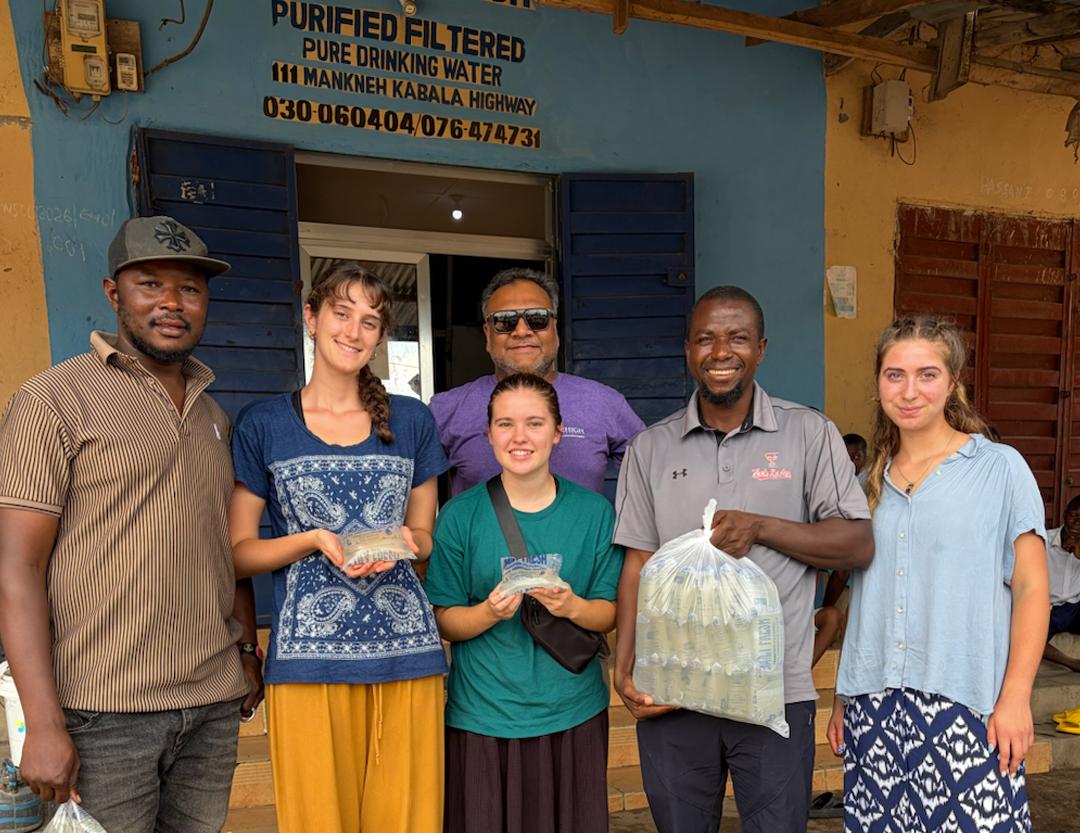
Diverse group of people posing with water sachets outside a purified water shop.

“Earning the Projects for Peace award has helped us so much to consider more possibilities and be inspired. Thanks to the funding, we were able to test and verify our work with our community partners, which I think is very helpful when connecting with new manufacturers,” said Rokhvarg, an integrated business and engineering student with a concentration in chemical engineering and finance who conducted fieldwork in Sierra Leone this past August.

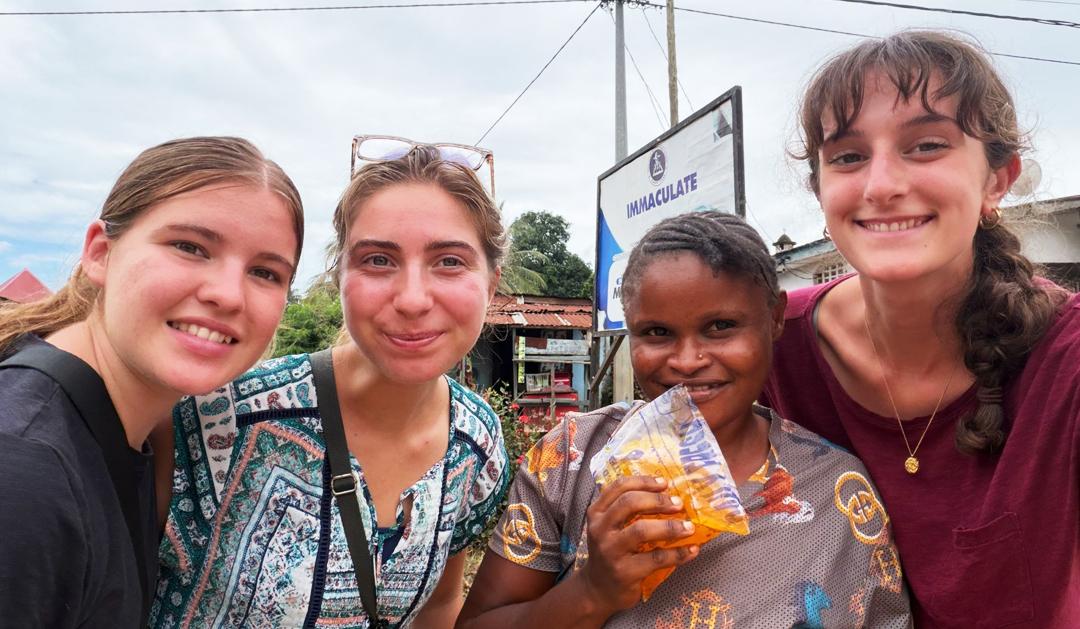
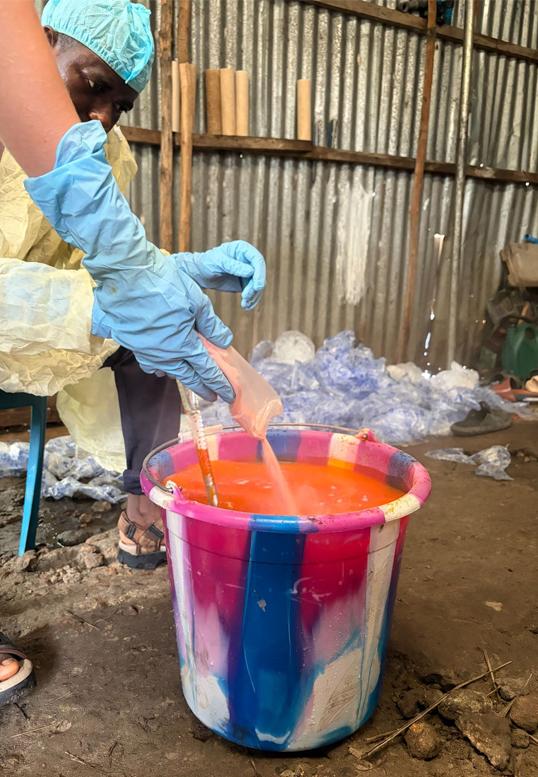
This year, SuperSip is moving into production and distribution through a local business partner, bringing hundreds of fortified water sachets that the team likens to a “Gatorade” product, to consumers weekly. Over the summer, the team prototyped with different flavored packets found on the market and added the micronutrients to reach 30% daily value in a single 500ml sachet.

Photograph of a person in protective gear pouring orange liquid into a colorful bucket.

They searched for local flavors like orange, coconut, tamarind, berry, strawberry and mango. From feedback, Rokhvarg said they saw that orange, coconut and tamarind were most popular. Throughout the project, the students have navigated the challenges of bringing a colored water product to market, and building trust with their audiences.

“I'm sure any startup will say the biggest fear is funding,” Sandhaus said. “Without Projects for Peace, I don't know how we would have gotten the ingredients for prototyping on our end. I think it really has enabled, especially from the SuperSip side, the continuation of the project to become a real product.”

Meanwhile, the team is finalizing the formulation of SuperPop, SuperSip’s frozen neighbor. They tested sealers and plastic molds they found in the market to prototype their own popsicles, Rokhvarg added. While working with local partners to test mango and tamarind flavors, they found that the plastic they were using wasn't strong enough and that pricing in different regions fluctuated based on whether they were selling the liquid SuperSip or frozen SuperPop.

“Our expenses went toward prototyping with micronutrients and flavoring to ensure that we are helping put the best possible product into the market that won't only be accepted by locals, but loved,” said Rokhvarg. “[Malnutrition] is such a preventable issue and I think I can speak for the entire team when I say we're more dedicated than ever to see this project succeed.”

Story by

Katie Clarke