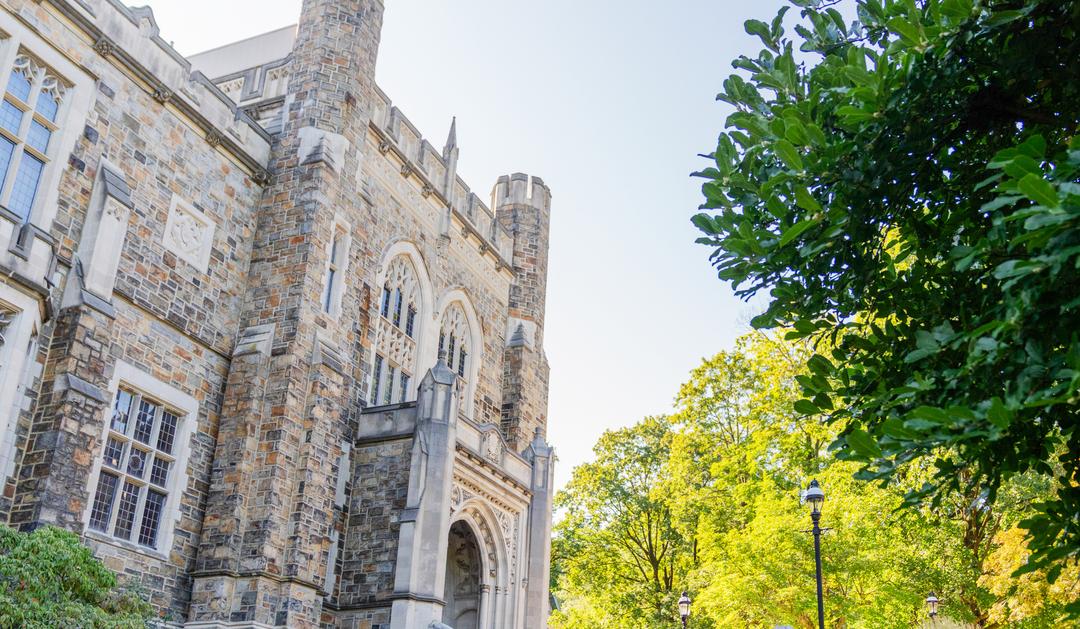
Photograph of a gothic stone building and lush green trees on a bright, sunny day.

Lehigh Researchers Earn 2 DOE Genesis Mission Funding Awards

Getting your Trinity Audio player ready...

Lehigh engineering faculty secure funding to advance efforts in tackling the nation’s real, complex science and technology challenges.

Story by

Katie Clarke

Photography by

Grace Alto ’26

Two projects led by Lehigh researchers received funding in the first round of U.S. Department of Energy Genesis Mission grants. The Genesis Mission is an initiative designed to accelerate breakthroughs in energy, scientific discovery and national security through supporting work that combines AI, supercomputing, quantum systems and advanced scientific instruments.

The projects, led by P.C. Rossin College of Engineering and Applied Science faculty members Hongyi Li, Eugenio Schuster and Tariq Rafiq, will improve flood-and water-level prediction and enable progress toward safe nuclear fusion energy. Li is an associate professor in the department of civil and environmental engineering and the first new hire into Lehigh’s University Research Center for Catastrophe Modeling and Resilience (CatModeling). Shuster and Rafiq are part of the mechanical engineering and mechanics department where Shuster is a professor and Rafiq is a research associate professor.

Lehigh’s two Phase 1 awards were among 278 selected projects led by national laboratories, universities, companies and nonprofit organizations, and Lehigh was one of only 41 universities leading two or more funded projects. In terms of grants awarded per faculty member, only Massachusetts Institute of Technology (MIT) and California Institute of Technology (Caltech) were awarded more grants through this program than Lehigh.

This funding reflects the past success of Lehigh faculty in transforming ideas into impact through deeply interdisciplinary research collaborations.

"Lehigh's faculty have long done outstanding research at the intersection of AI and energy and we are excited that two proposals from our faculty will be supported by this critical new program,” said Nathan Urban, provost and senior vice president for academic affairs. “This success is connected to our investments in our University Research Centers for Advancing Community Electrification Solutions and in Catastrophe Modeling and Resilience, and highlights the role that Lehigh is playing in advancing innovation needed to create the secure, stable and resilient energy infrastructure that is the foundation of American economic competitiveness."

Photograph of a man with glasses, wearing a navy pinstripe suit and light blue shirt.

Tariq Rafiq, research associate professor of mechanical engineering and mechanics.

Advancing Fusion Energy Through AI Platforms

Rafiq and Schuster will lead the project “REACT: Reactor Exhaust And Core Twin — Multi-fidelity AI Predictions for Safe, Integrated, and High-Performance Control.” With colleagues, they will develop AI tools to advance fusion energy.

While current nuclear energy generates power through fission (splitting heavy atoms), fusion energy seeks to replicate the power of the sun by combining light atomic isotopes under extreme temperatures. If successfully harnessed, fusion promises an abundant, carbon-free source of clean firm electricity to support the global energy transition.

However, realizing fusion energy at reactor scale requires controlling ultra-hot core plasma while simultaneously managing extreme heat and particle exhaust at the reactor walls. Conventional physics simulations of these boundary dynamics can take weeks or months to run, making real-time control impossible.

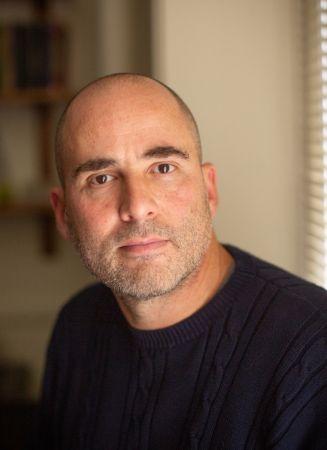
Portrait photograph of a man with a shaved head and stubble wearing a navy sweater.

Eugenio Schuster, professor of mechanical engineering and mechanics.

The team, led by Lehigh in collaboration with Oak Ridge National Laboratory and Columbia University, is bridging this gap by replacing computationally intensive boundary simulations with ultra-fast AI surrogate models. Integrated directly into a "control-first" digital twin, these AI models calculate accurate plasma states in milliseconds, enabling active closed-loop control to protect reactor surfaces while maintaining peak energy performance.

"We are deeply grateful to the Department of Energy for this recognition and support,” said Schuster and Rafiq. “The REACT project allows us to leverage decades of our team's expertise in physics-based modeling and real-time tokamak control, fusing it with cutting-edge AI capabilities enabled by the Genesis Mission.”

“By developing AI-driven digital twins for integrated plasma core and exhaust control, this award accelerates our mission to enable safe, predictable and high-performance fusion energy,” Schuster noted. “Furthermore, this award serves as a powerful catalyst to expand Lehigh’s research footprint and strategic impact in nuclear energy technologies as key pillars of our nation's clean energy future.”

Rafiq and Schuster are leaders in nuclear-fusion plasma control as co-directors of the internationally recognized Lehigh University Plasma Control Laboratory. Since establishing the laboratory, Schuster and his team have secured over $13 million in competitive DOE and NSF research funding, establishing a sustained track record of developing real-time control frameworks and physics-based models for major fusion facilities worldwide, including DIII-D and NSTX-U in the United States, KSTAR in South Korea and ITER, the world’s largest nuclear fusion reactor under construction in France.

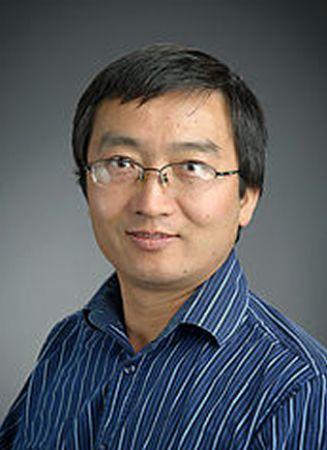
Headshot photograph of a man with glasses and a blue striped shirt.

Hongyi Li, associate professor of civil and environmental engineering.

Tackling Long-Standing Water-Energy Challenges with AI-Powered Model

Li will lead the project “RIVER-AI: Reservoir-Groundwater Interactions for River Flow Variability, Energy, and Resilience with AI.”

The team includes CatModeling faculty Brian Davison, Daniel E. ’39 and Patricia M. Smith Professor and Chair of the department of computer science and engineering, and Ethan Yang, associate professor in the department of civil and environmental engineering, and collaborators from the Pacific Northwest National Laboratory, Oak Ridge National Laboratory, University of Texas at Austin (UT Austin) and City College of New York. The team will develop a hybrid AI-physics modeling platform, RIVER-AI. Its progress will capture and improve prediction of water availability and risks critical to energy systems and communities, beginning right at the Delaware River Basin, where Bethlehem resides, and transferable to the whole nation.

“Rivers supply much of the water that the nation’s energy systems depend on, yet predicting river behavior remains a persistent scientific challenge globally, despite humans’ long history of studying hydrology. Our team is uniquely positioned to tackle this challenge by harvesting the power of AI,” Li said.

Rivers, reservoirs and underground aquifers are closely connected and shape how floods and droughts evolve and threaten America’s water and energy security. Today's computer models often treat them as separate systems and, more importantly, poorly simulate how humans manage them. A major barrier is that unstructured contextual information, such as operating manuals, policy provisions and institutional practice, is heavily relied on by real-world water managers yet unreadable to computers and missing from conventional numerical models.

A key innovation of RIVER-AI is to use large language models (LLMs) to help translate unstructured, contextual knowledge into machine-readable operating rules. A trustworthy AI workflow then integrates various physics- and AI-based modeling pieces together into a platform that will predict natural hazards better and faster, providing more reliable and actionable support for the nation’s water and energy resilience.

“I am deeply grateful for this Genesis Mission award, for the outstanding collaboration of my colleagues and for the exceptional support from Lehigh’s Office of Research and Sponsored Programs, the Center for Catastrophe Modeling and Resilience, the department of civil and environmental engineering and university leadership,” Li added.

Li joined Lehigh in January 2026 following a search targeted at hiring faculty connected to the Center for Catastrophe Modeling and Resilience. His research lies at the interface between surface hydrology and earth system modeling from a coupled earth-human system perspective, aiming to understand, predict, and mitigate risks associated with natural hazards. His group develops and uses novel model-driven and data-driven approaches, including big data and artificial intelligence techniques, for better planning and maintaining a sustainable and resilient environment in which we all live.

The goal of the Phase I Request for Application awards is to identify promising pathways toward transformative scientific capabilities and establish a foundation for future investment and scale. Project teams will design and demonstrate research workflows that integrate AI with scientific investigation, while rigorously evaluating whether those approaches can accelerate discovery, improve predictive capabilities, enhance experimentation or generate new scientific insights.

Story by

Katie Clarke

Photography by

Grace Alto ’26