

When College of Health assistant professor and ethicist Ally Peabody Smith applied for a Future Maker Grant last January, she envisioned a project that would make the lived experience of mental health more visible, more relatable and more deeply understood. Just a few months later, that idea came to life through the Phenomenologies of Mental Health Art Exhibition, an intercollegiate collaboration featuring artists from a wide range of departments across the university. The exhibition itself was shaped by contributions from diverse academic areas working together to illuminate the complexities of mental health.
Art, Empathy and Interdisciplinary Innovation: A Collaborative Exhibit Explores the Lived Experience of Mental Health
Getting your Trinity Audio player ready...
One year after receiving a Future Maker Grant, Lehigh College of Health ethicist Ally Peabody Smith’s interdisciplinary project created space for reflection, wellbeing and community.
Share This Story


Photography by
Will Sgro '26
Christa Neu
Posted on
December 19, 2025
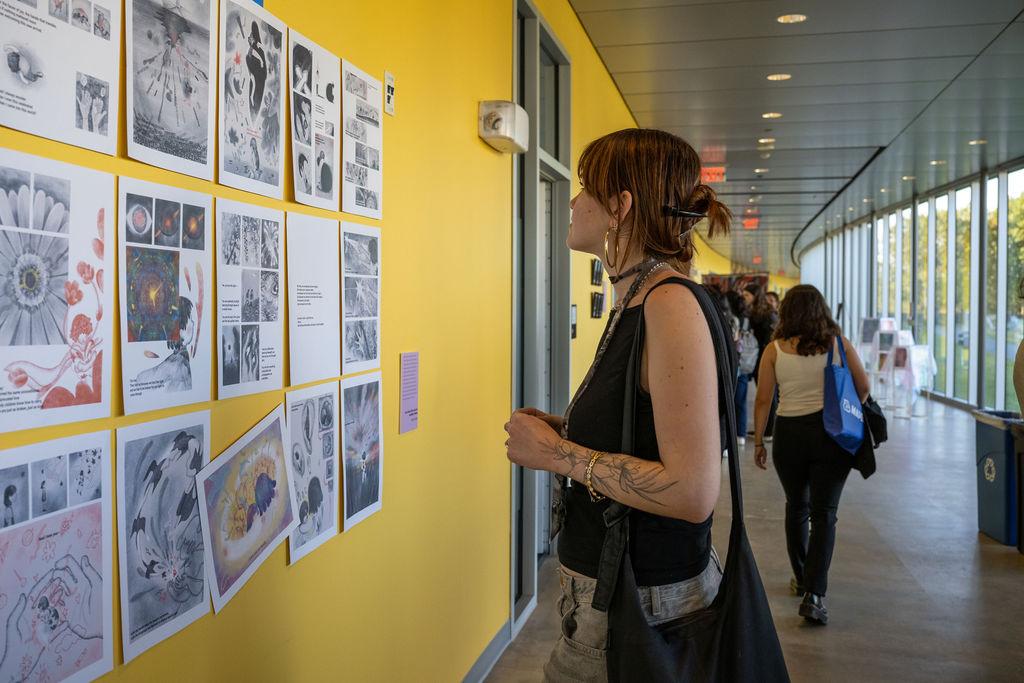
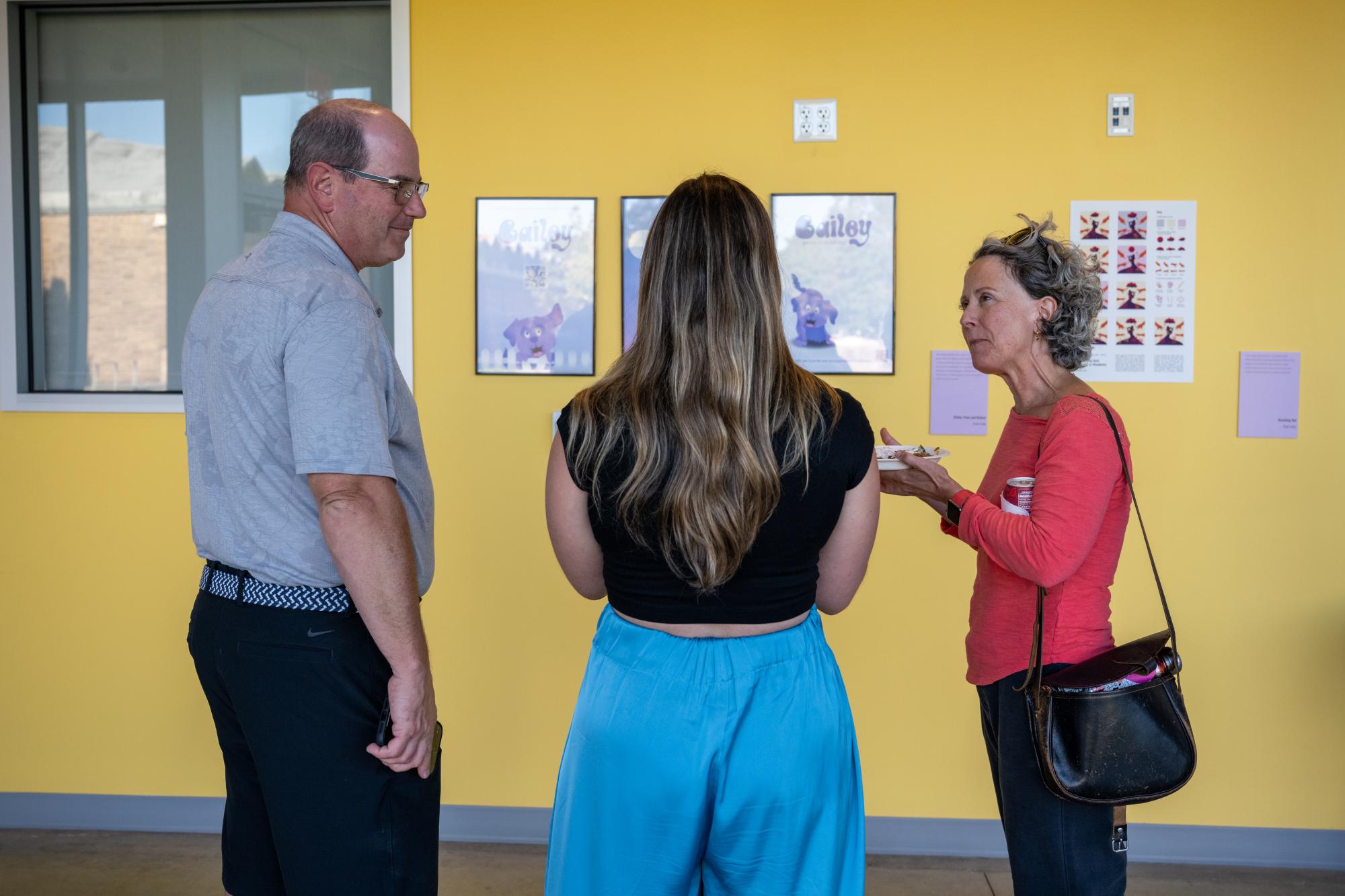
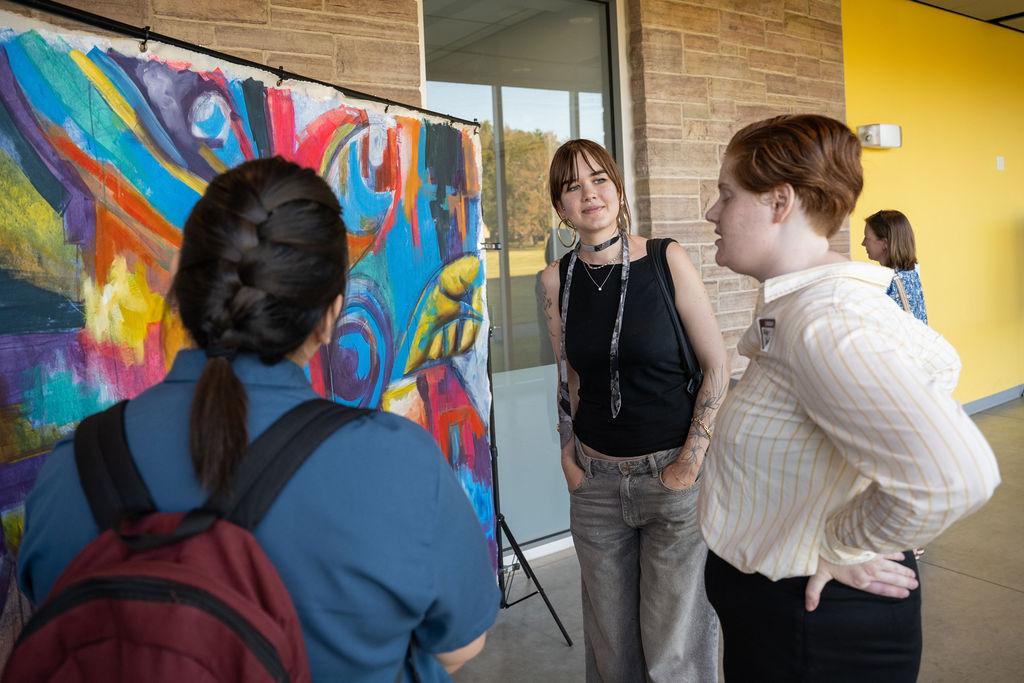
Students explore featured artists' work during the Phenomenologies of Mental Health art exhibition opening.
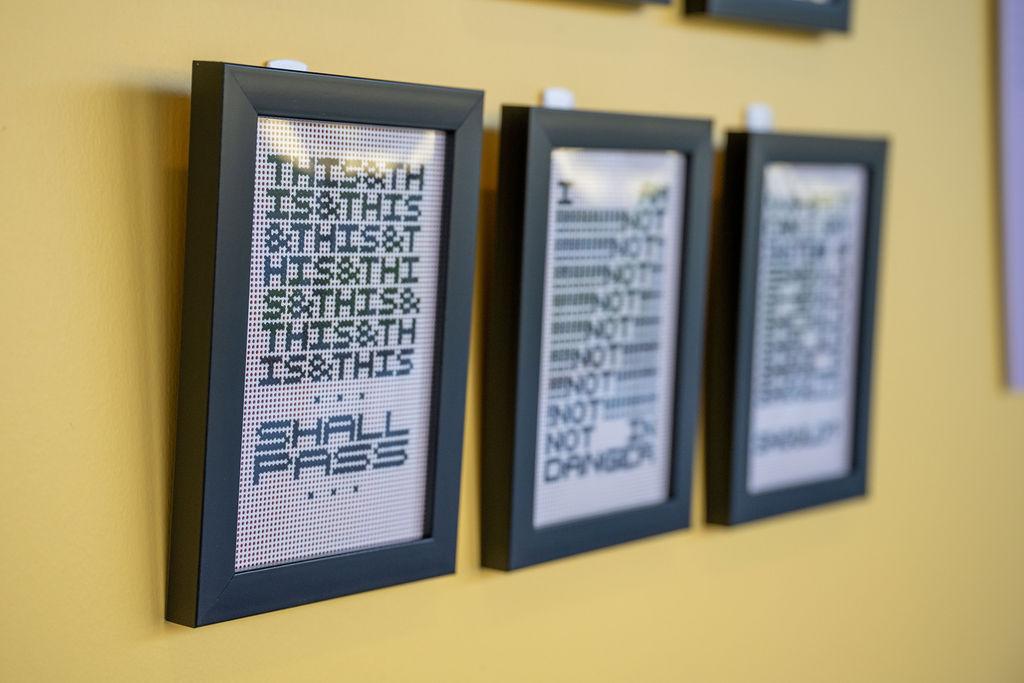
AAD faculty member, Jennifer Kowalski's cross-stitch work “Repetitions,” was part of the art exhibition.
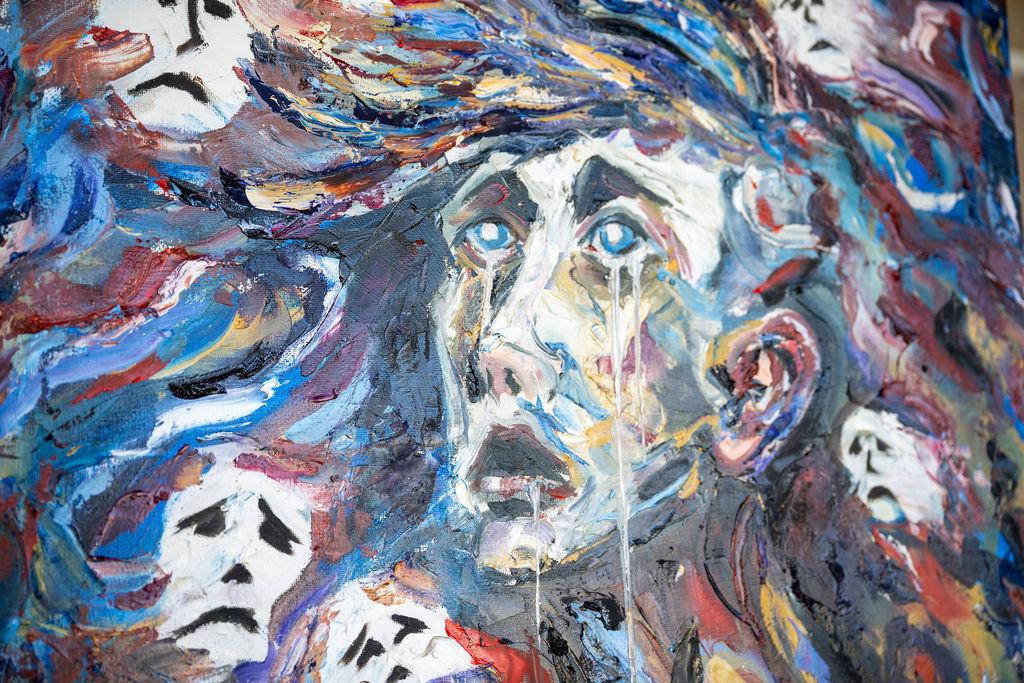
Artwork ranged from oil painting and graphic art to embroidery, photography and screen printing.
Hosted on Mountaintop throughout the fall semester, the exhibition was developed in tandem with the academic conference Peabody Smith organized earlier this year along with colleagues Fathima Wakeel, Tracy Nichols, and Ellie Anderson, Phenomenologies of Mental Health, Well-Being, and Flourishing. Together, the conference and exhibition brought students, faculty and researchers into conversation about the first-person experience of mental health, also known as phenomenology.
Art as a Bridge Between Theory and Lived Experience
As a philosopher and ethicist, Peabody Smith studies how philosophical assumptions shape real-world health outcomes. “Theory impacts practice,” she says. “When you look at the history of how we’ve viewed different types of people in any given society, you can see the connection between prevailing philosophical attitudes and who is left out or treated unjustly. Ethical thinking, even in its most theoretical forms, trickles down to application, including health outcomes for marginalized groups.”
The exhibition gave tangible form to these ideas. Featuring work by Lehigh faculty and students in the AAD department, the installation explored themes of identity, perception, vulnerability, flourishing and the complex emotional landscapes that accompany mental health challenges. The project highlighted how creativity can foster empathy and reflect the diversity of mental health experiences within the student community.
The piece symbolizes two worlds that live inside each victim of war and community trauma.
Student Perspectives: Lived Experience Through Art
For participating student artists, the exhibition offered a space to translate deeply personal mental health experiences into visual form. Kate Saltovets ‘26, a Ukrainian student who fled the war in her home country, used her work to explore the psychological impact of war and community trauma, particularly survival guilt and the ongoing search for healing.
“The piece symbolizes two worlds that live inside each victim of war and community trauma,” Saltovets said. “There is a sense of survival guilt that lives within us, which prevents us from fully enjoying our lives and also hinders our ability to move forward in fighting injustice. The other side of the painting serves as a reminder that those struggling with survival guilt or community trauma can find healing and relief through the celebration of their culture and love for life. In times of political instability, oppressors want us to feel depressed and miserable so we don’t have the energy or strength to resist, making joy an essential tool for survival.”
Saltovets intentionally displayed the darker side of her two-sided painting facing viewers, inviting the campus community into a conversation about grief, psychological recovery and the lasting mental health consequences of war — particularly at a time when public discussion of ongoing conflict is declining.
Another student artist, Rooster Demotte ’27, explored the internal experience of obsessive-compulsive disorder (OCD) through Intrusive Action, a mixed-media collage created from discarded mail. The piece features an invasive fish consuming a hand, a metaphor for self-excoriation — a compulsive behavior associated with OCD that often remains unseen.
A label reading “not to scale” draws attention to the gap between outward appearance and internal distress, underscoring how the invisible weight of living with OCD can far exceed its visible effects. “I want people to slow down and really notice the details,” Demotte said, reflecting the exhibition’s broader goal of fostering empathy through close, thoughtful engagement with lived mental health experiences.
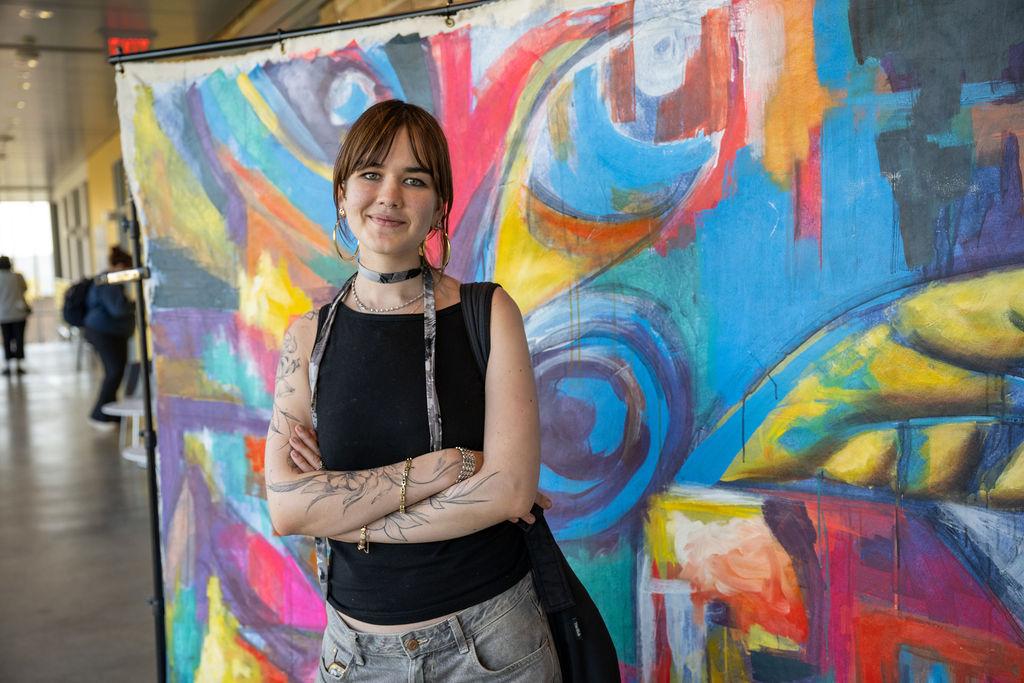
Participating artist Kate Saltovets ‘26, a Ukrainian international student, showcased her work that explores the mental health challenges presented by the trauma of war.
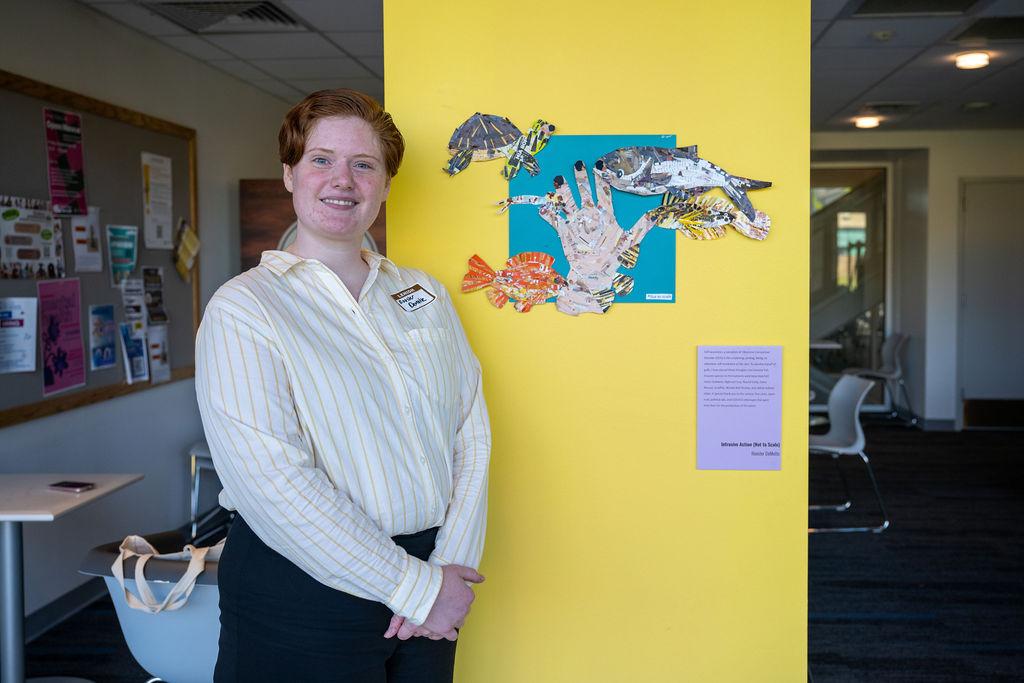
Sofia (Rooster) Demotte ’27, a Community and Public Health major and Business Minor, explored obsessive-compulsive disorder (OCD) in her mixed-media collage work.
A Relaxing, Restorative Space Before Finals
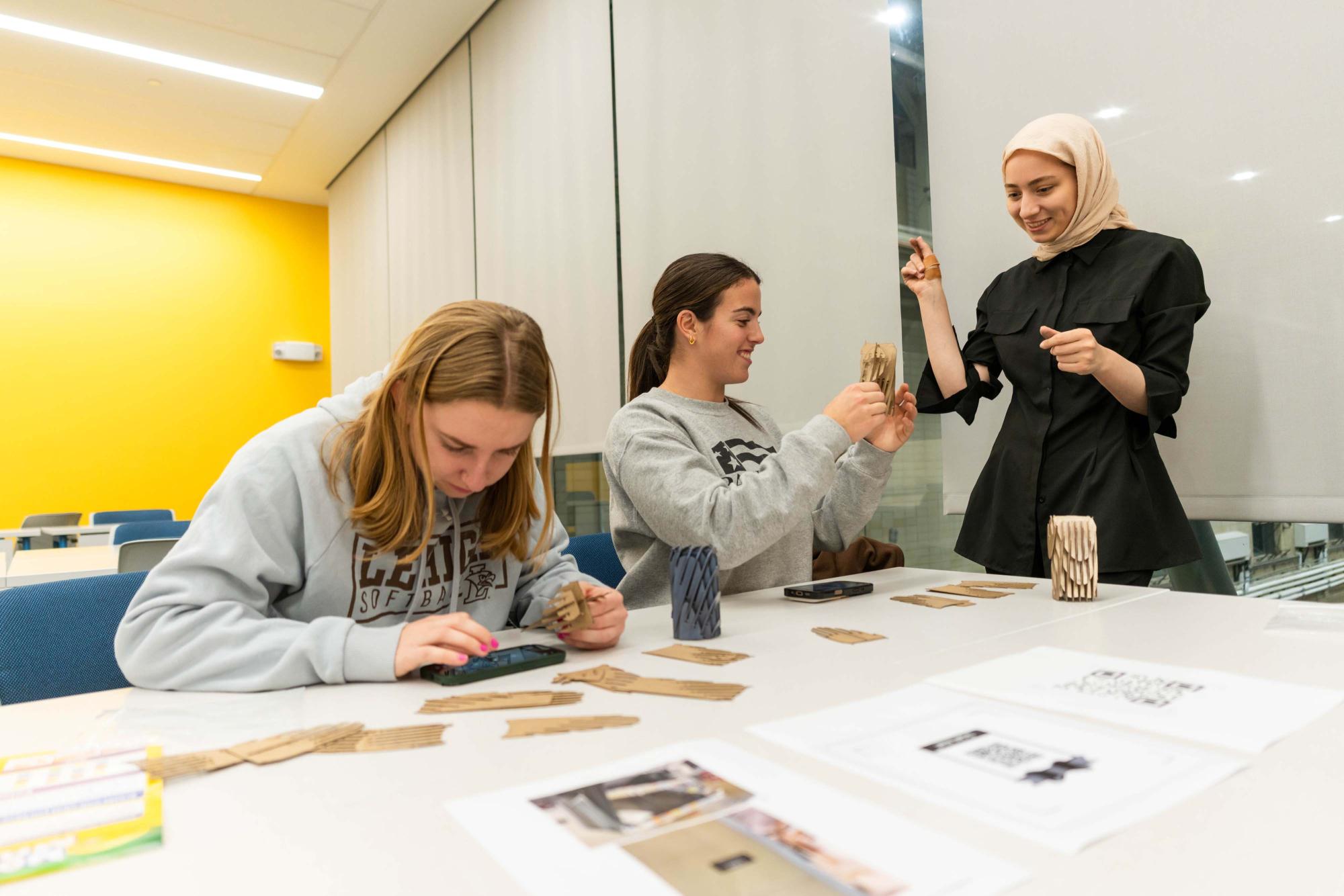
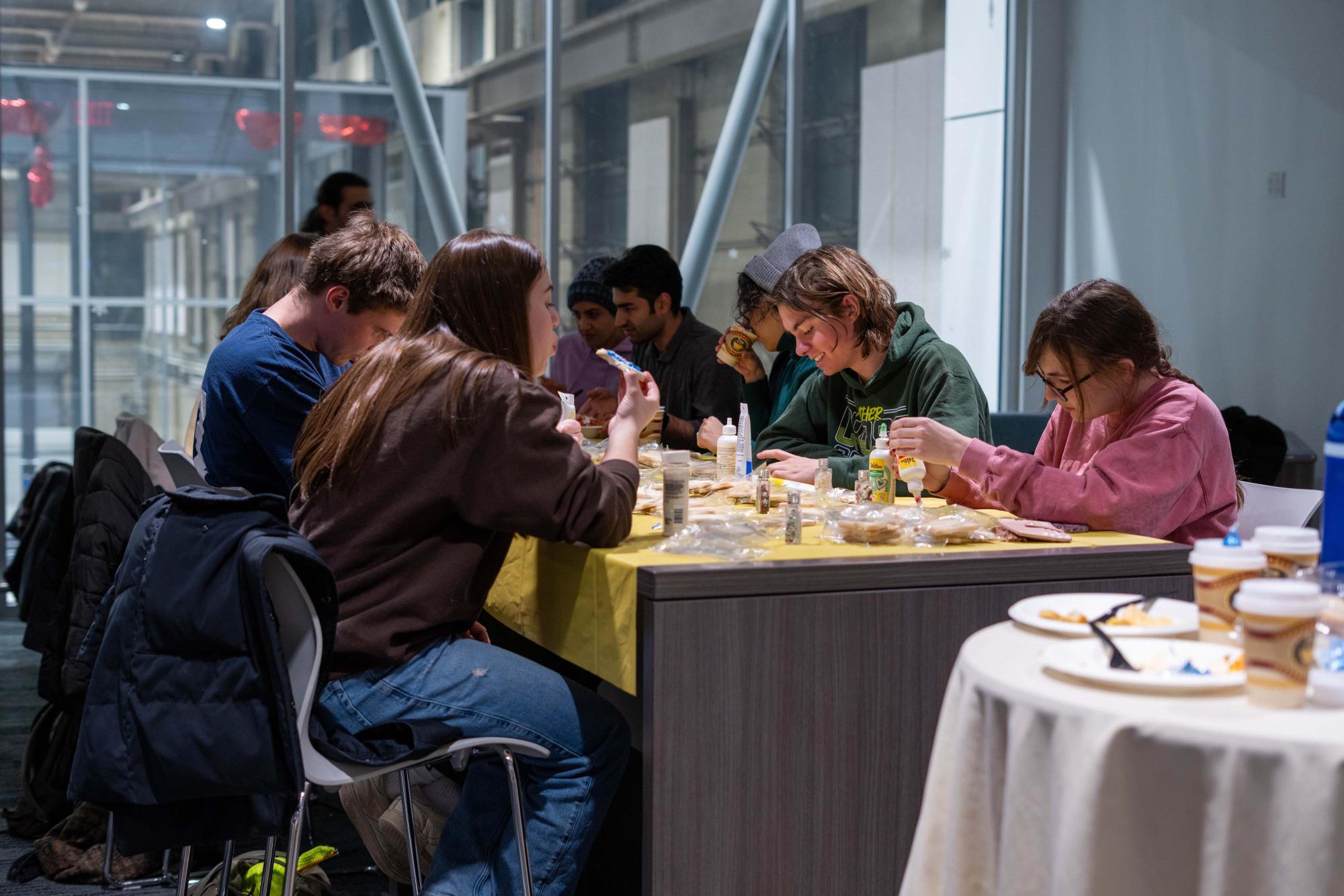
The exhibition concluded with a closing event on Monday, Dec 8th. Students and community members had the chance to:
- Meet the artists
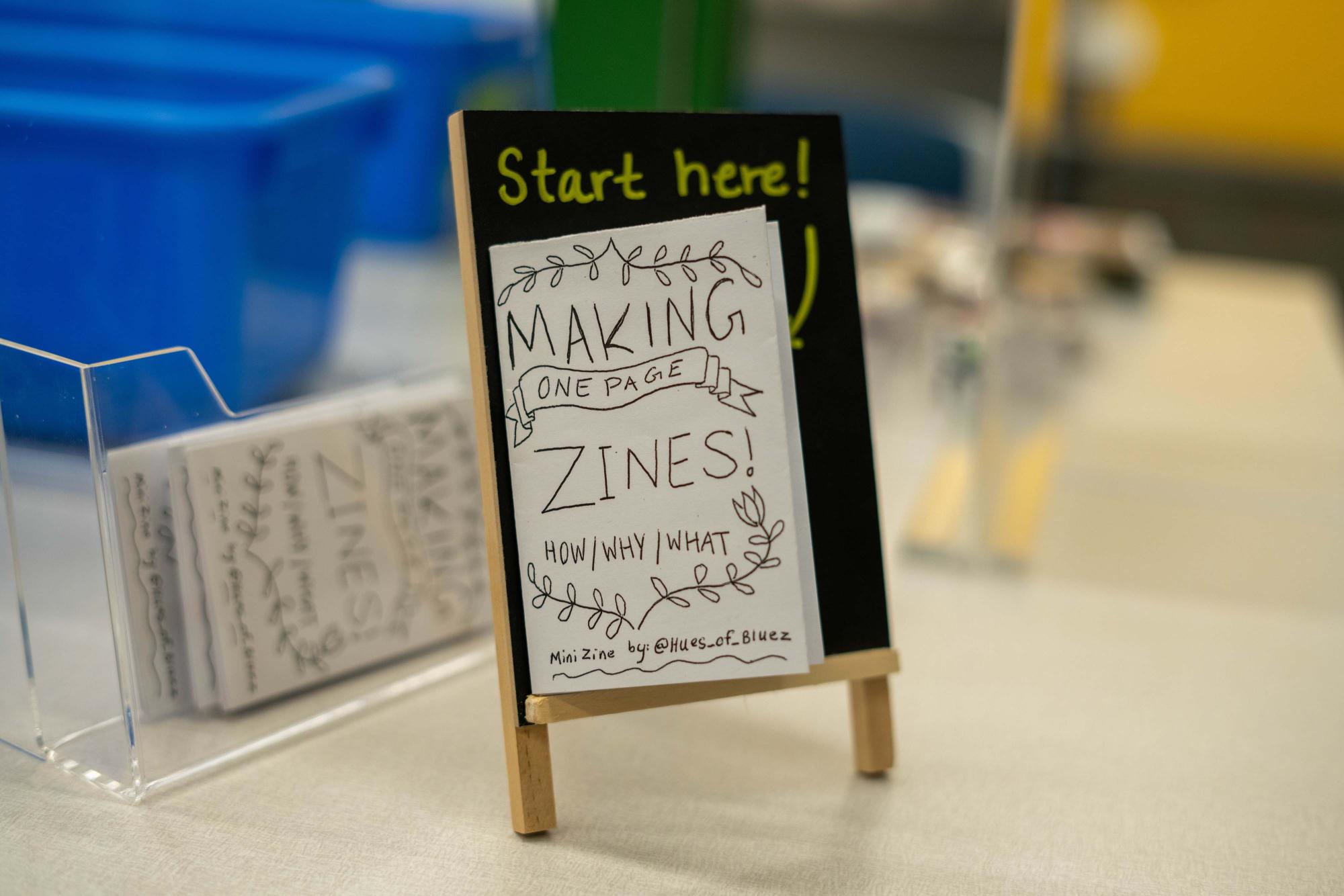
- Engage in mental-health–focused activities
- Explore campus resources for well-being offered by University Counseling and Psychological Services (UCPS) and the Health and Wellness Center.
- Take a calming study break before finals
The event created a welcoming, restorative environment during one of the semester’s most demanding periods and offered meaningful opportunities for connection and reflection.
The project also exemplified the power of purposeful partnerships. While the selection and curation of artworks were carried out independently, COH and AAD colleagues supported the broader vision and implementation of the exhibition. UCPS contributed programming and resources that helped deepen student engagement, rounding out an effort that brought multiple campus partners together in meaningful ways.
A One-Year Update on Future Maker Impact
While the heart of this story lies in the exhibit and the interdisciplinary work behind it, the project also demonstrates the value of Lehigh’s Future Maker Grants, which empower faculty and staff to pursue innovative ideas aligned with the university’s strategic plan, Inspiring the Future Makers.
Peabody Smith’s project is one of several Future Maker projects helping to strengthen the student experience, foster creative problem-solving and promote collaboration across colleges. The exhibition’s impact, spanning research, education and community well-being, reflects how Future Maker projects continue to drive meaningful outcomes across campus.
About Peabody Smith
Peabody Smith joined Lehigh in 2024 as an assistant professor of population health. Her research spans the philosophy of medicine, bioethics, neuroethics and the ethics of emerging brain technologies. She is also active as a conference organizer, collaborator and advocate for more equitable health outcomes for individuals with intellectual and developmental disabilities.
Her Future Maker project integrated these interests by centering the subjective experience of mental health—inviting viewers, clinicians and researchers alike to reconsider how we perceive and respond to the needs of individuals across the spectrum of mental well-being.
Share This Story
Photography by
Will Sgro '26
Posted on
December 19, 2025